Lumbar hyperlordosis (commonly known as swayback) does not only affect your physical posture but is also a leading cause of chronic lower back pain. Choosing the correct sleeping position for hyperlordosis is vital to reducing pressure on the lumbar spine and improving sleep quality. This article provides detailed, expert-guided instructions to help you protect your spinal health.
Understanding Hyperlordosis and Its Impact on Sleep
Hyperlordosis is a condition where the lumbar spine has an excessive inward curve. When standing, this often causes the abdomen to push forward and the pelvis to tilt back, creating an exaggerated S-shape.
For those with hyperlordosis, sleeping on an unsuitable surface or in a poor position allows gravity to pull the lower back further downward, increasing pressure on the vertebrae and discs. This leads to morning stiffness, numbness in the limbs, and, over time, can contribute to disc herniation. Therefore, identifying the right sleeping position for hyperlordosis is a top priority for long-term musculoskeletal health.
Best Sleeping Positions for Hyperlordosis
Based on clinical research from international experts and major health systems like UMC Clinic and Vinmec, here are the positions that help neutralize spinal curvature:
Back Sleeping with a Pillow Under the Knees (The “Golden” Position)
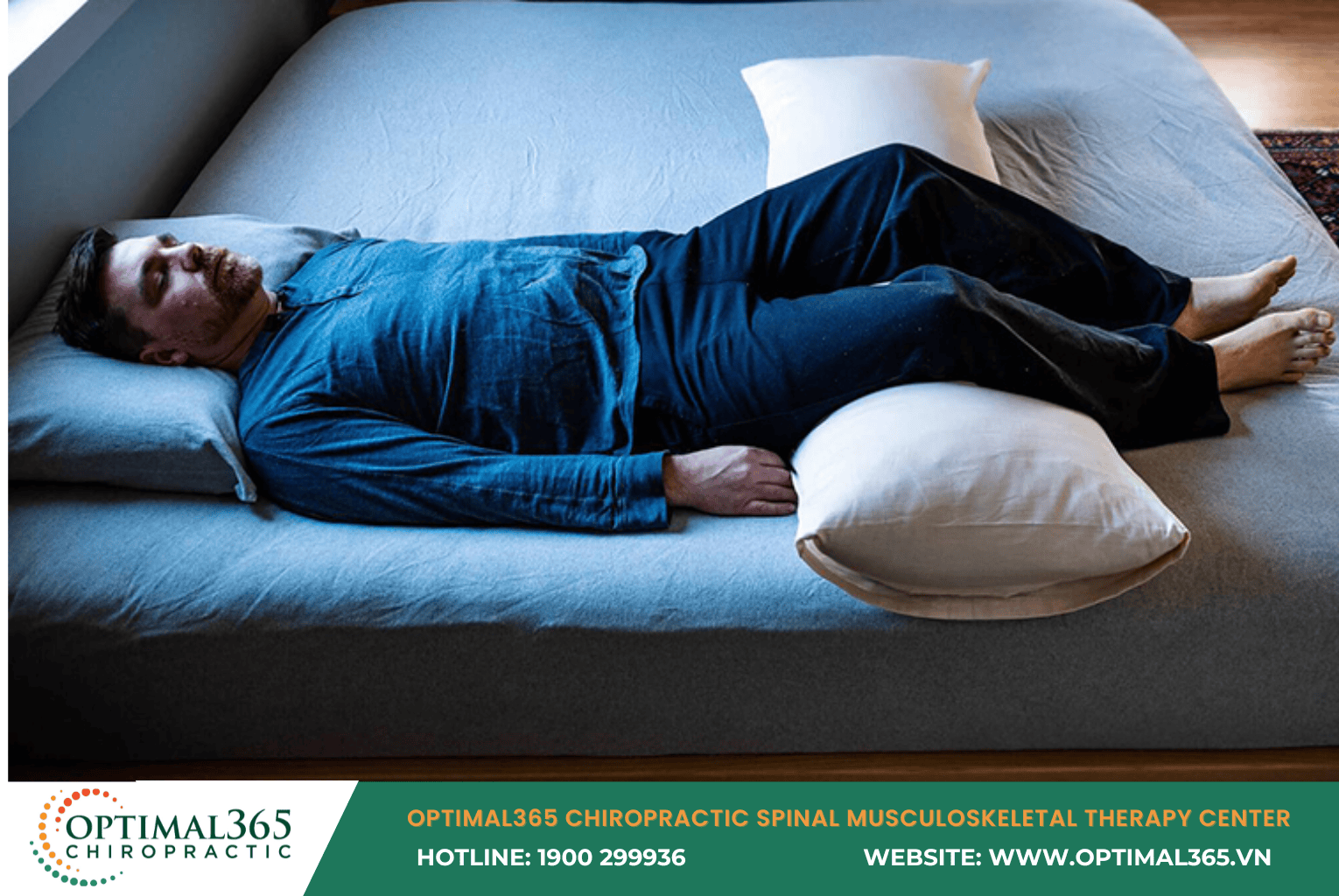
This is the most recommended position by orthopedic specialists. When lying flat on your back, the gap between the lower back and the mattress is often quite large for those with swayback.
How to do it: Lie on your back and place a medium-height pillow directly under your knees (the popliteal space).
The Benefit: Elevating the knees helps the pelvis rotate backward, which flattens the lower back against the mattress. This reduces tension in the lower back muscles and ensures better spinal contact with the bed.
Side Sleeping with a Pillow Between the Legs
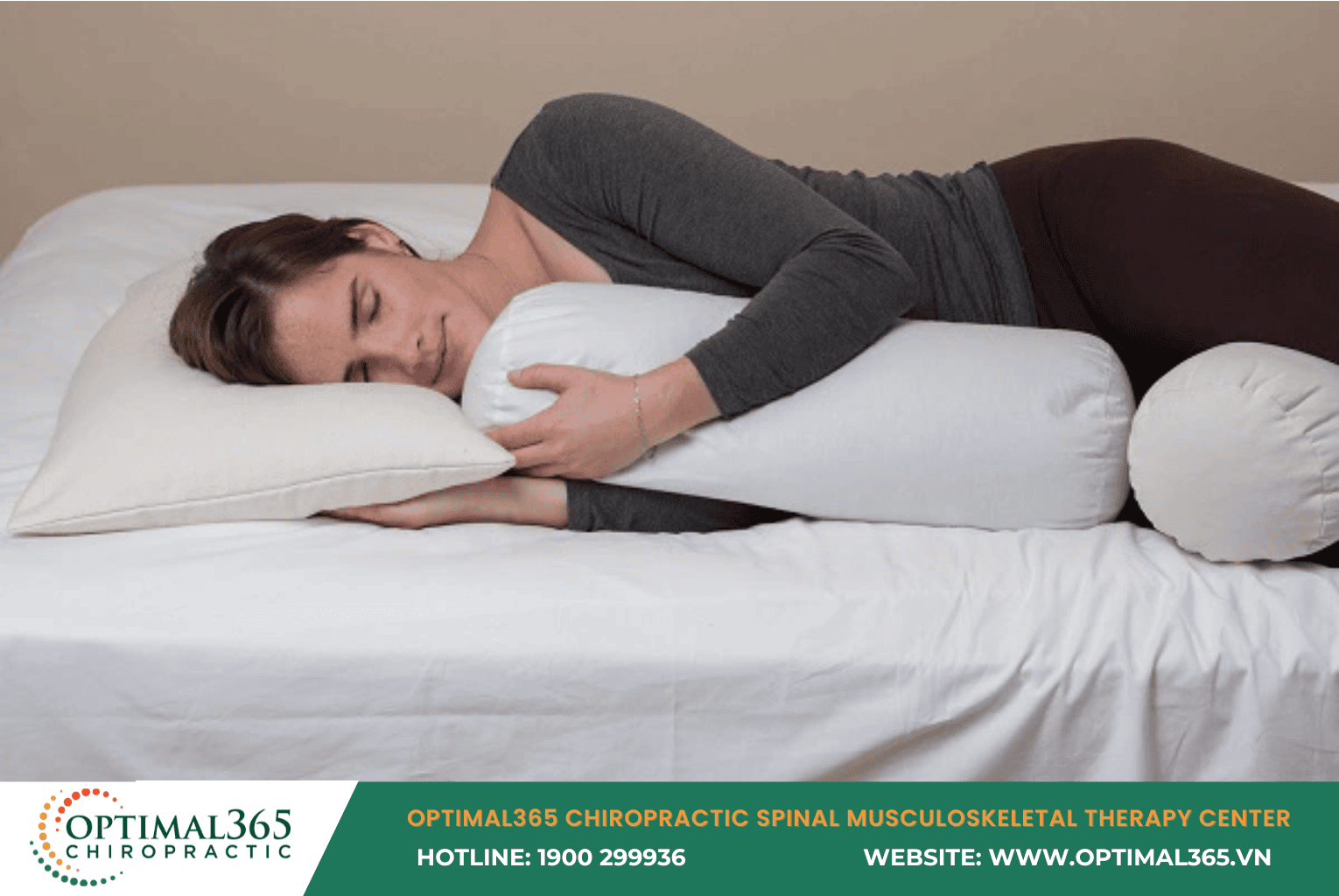
If you are a side sleeper, paying attention to the alignment of your hips and knees is crucial.
How to do it: Lie on your side (left or right), slightly pulling your knees toward your chest (a gentle fetal position). Place a firm pillow between your knees.
The Benefit: According to experts at Healthline, a pillow between the legs keeps the hips, pelvis, and spine in proper alignment. This prevents the top leg from pulling the pelvis into a rotation, which would otherwise cause painful twisting of the lower spine.
Back Sleeping with a Lumbar Support Pillow

In severe cases of hyperlordosis, even the knee-pillow method might leave a painful gap under the waist.
How to do it: Place a very thin pillow or a rolled-up towel directly under the hollow of your back.
The Benefit: This provides gentle support for the physiological curve, preventing the back muscles from straining to maintain their position throughout the night.
Sleeping Positions to Avoid at All Costs
People with hyperlordosis should strictly avoid sleeping on their stomach. Research from Scolioaustin highlights that stomach sleeping is the “enemy” of the lumbar spine.
The Reason: When lying face down, gravity pushes the abdomen down, forcing the already curved lumbar spine into an even deeper arch. This compresses the spinal discs and often leads to neck pain since the head must be turned to one side to breathe.
Expert Advice: If you absolutely must sleep on your stomach, place a thin pillow under your lower abdomen and pelvis to lift the spine into a more neutral position.
International Expert Insights on Sleep and the Spine
To gain a deeper understanding, let’s look at what experts from Sciatica and Healthline say about optimizing sleep for spinal issues:
Mattress Choice: Specialists from Scolioaustin emphasize that a mattress that is too soft will cause the hips and lower back to sink, worsening the arch. Conversely, a mattress that is too hard creates pressure points. The optimal choice is a Medium-firm mattress.
Pre-sleep Habits: Sciatica suggests performing gentle stretching exercises before bed to release tension in the hip flexors—a muscle group that is typically tight in people with hyperlordosis.
Spinal Uniformity: Healthline reminds us that regardless of your position, your ears, shoulders, and hips should always form a relatively straight line to minimize unnecessary stress.
Supplementary Tips to Effectively Improve Hyperlordosis
In addition to maintaining a proper sleeping position for hyperlordosis, you should combine these factors for long-term results:
Choose the Right Head Pillow: The pillow should not be so high that it cranks your neck forward, nor so low that your head tilts back. The goal is to keep the neck aligned with the thoracic spine.
Use a Mattress Topper: If your current mattress is too firm, adding a memory foam topper can increase the surface area of support and cradle the body’s natural curves.
Consistent Exercise: Hyperlordosis is often caused by an imbalance between weak abdominal muscles and tight lower back/hip flexor muscles. Focus on strengthening your core and glutes.
Conclusion and Final Expert Advice
Changing your sleeping habits won’t happen overnight, but consistently applying these sleeping positions for hyperlordosis—such as using pillows for support—will lead to a noticeable reduction in pain and improved spinal flexibility.
However, sleeping positions are only a supportive solution to reduce pain and prevent further progression. To truly correct your posture and return your spine to its natural state, you must combine these habits with specialized exercises that adjust the pelvis and strengthen the core.
👉 Explore now: Top 7 Exercises for People with Hyperlordosis to Improve Posture and Spine to start your journey toward a perfect posture today!
For complementary exercises that work alongside proper sleep positioning, explore these top 7 exercises for anterior pelvic tilt that directly address the root cause of hyperlordosis and lower back pain.