School-Age Scoliosis: Warning Signs Parents Should Watch for in Children
School-age scoliosis is becoming a growing health concern among children and adolescents, especially during the school years. This condition not only affects posture but can also cause back pain, limit movement, and impact bone development if not detected early. Many parents only notice the problem when it has already become obvious, making treatment more complicated. This article helps parents recognize the signs of school-age scoliosis at home so they can take timely action.
What Is School-Age Scoliosis?
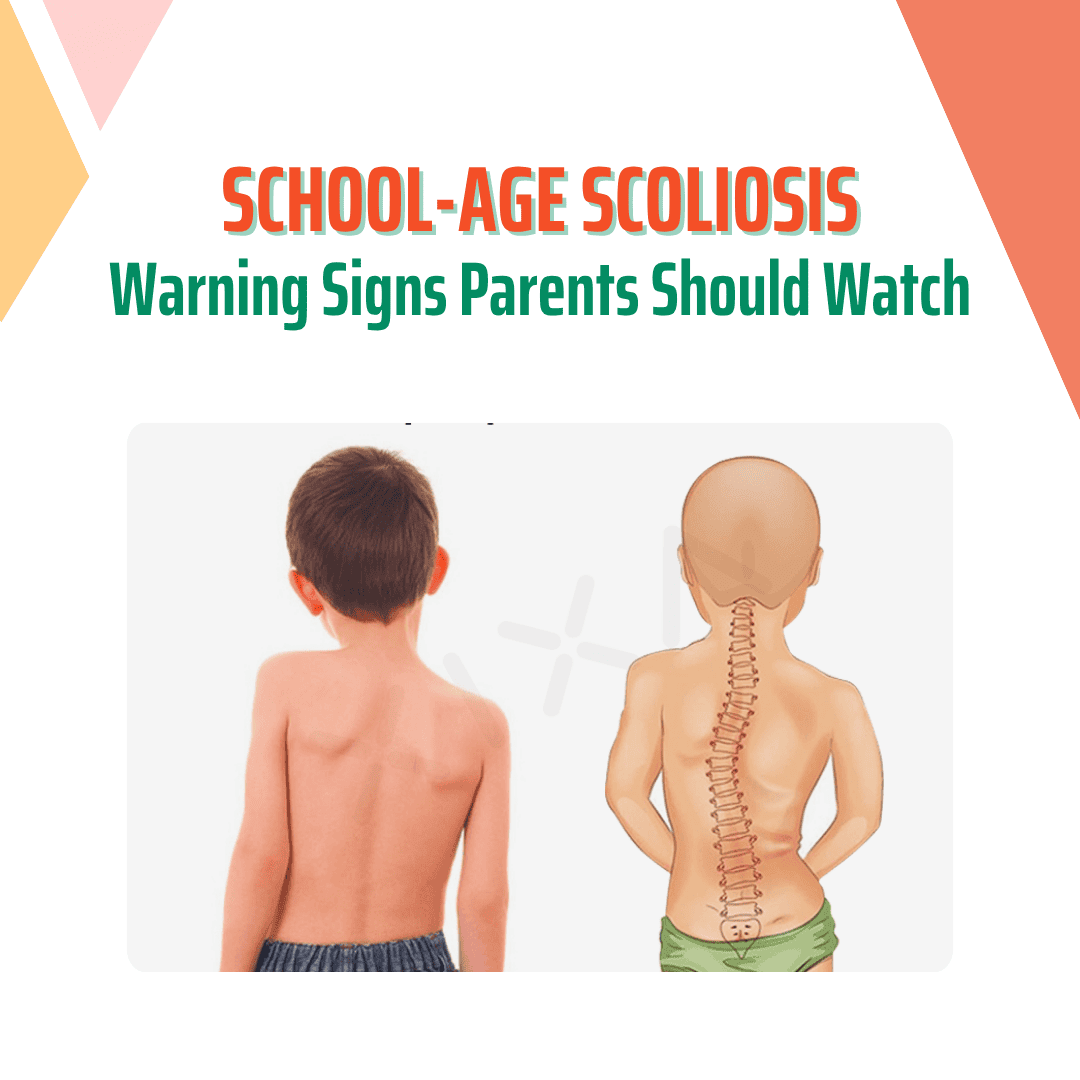
School-age scoliosis is a condition in which the spine deviates from its normal alignment. It often appears or becomes more noticeable during periods of rapid growth (around ages 10–16). This is the most common form of idiopathic scoliosis in children and is not caused by injury or severe congenital conditions. The spine may curve to one side (forming a C or S shape) and also rotate, causing one shoulder or hip to sit higher than the other.
According to experts, most mild cases only require monitoring and exercise. However, if the curve progresses, it can affect appearance, breathing, and the child’s long-term quality of life.
Why Are Children Prone to School-Age Scoliosis?
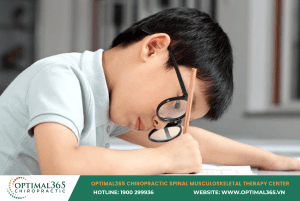
The exact cause of school-age scoliosis is still not fully understood, but several related factors include:
- Rapid growth during puberty
- Genetic factors (if parents or siblings have had scoliosis)
- Poor sitting posture while studying and carrying heavy backpacks unevenly
- Lack of physical activity and prolonged sitting in front of computers or phones
- Muscle imbalance around the spine
The school environment, with long hours of sitting, can make the condition more likely to progress if a child already has a tendency toward spinal curvature.
Warning Signs Parents Should Watch for in Children
Early detection is the key to effectively managing school-age scoliosis. Parents can check at home by observing their child standing straight, preferably with a bare back or wearing a thin shirt.
Signs when viewed from behind
- Uneven shoulders – one side higher than the other
- One shoulder blade protruding more clearly
- Uneven waistline – one hip higher or more prominent
- Different distances between the arms and the torso on each side
- When the child bends forward (Adam’s forward bend test), one side of the back shows a clear rib hump
Signs when viewed from the side
- Abnormal arching or rounding of the back
- Head tilted to one side relative to the body
- Overall unbalanced standing posture
Other signs parents often overlook
- Frequent complaints of back pain, shoulder pain, or neck fatigue after school
- Clothing that looks uneven, with one shoulder of a shirt sitting higher
- The child always leans to one side while sitting at the desk
- Slower-than-expected height growth compared to peers during puberty
If one or more of these signs are present, parents should take the child to a spine specialist or orthopedic doctor for an accurate measurement of the curve using X-rays.
When Should Parents Take Their Child to the Doctor?
Parents should seek medical evaluation promptly when:
- Clear asymmetry of the shoulders or hips is visible
- The child complains of back pain lasting more than 2–3 weeks
- There is a family history of scoliosis
- The child is in a rapid growth phase (ages 10–15)
Early examination allows the doctor to assess the curve severity (Cobb angle) and recommend appropriate monitoring or intervention, preventing rapid progression during the growth spurt.
Prevention and Home Support Measures
Although school-age scoliosis cannot always be completely prevented, parents can help reduce the risk of progression with these measures:
- Remind the child to sit with a straight back, feet flat on the floor, and a desk at the proper height
- Choose a backpack with two straps and keep the weight under 10–15% of the child’s body weight
- Encourage daily physical activity such as swimming, children’s yoga, or regular exercise
- Limit prolonged sitting — have the child stand and move every 30–40 minutes
- Monitor the child’s height and posture every 3–6 months
According to the Mayo Clinic, early detection and regular monitoring play an important role in controlling the progression of scoliosis in children. In addition, information from pediatric orthopedic centers emphasizes that most mild cases can be well managed when parents carefully observe and seek evaluation at the right time.
Conclusion
School-age scoliosis is a common condition that can be detected early if parents know how to observe simple signs at home. Timely recognition allows proper monitoring and intervention, reducing the risk of future complications. Take time to regularly check your child’s posture, especially during the school years and puberty. If any unusual signs appear, do not hesitate to take your child to a specialist for accurate advice.
References
Mayo Clinic – Scoliosis: Symptoms and causes: