Focus Keyword: flat feet and spinal misalignment
Flat Feet and Their Close Relationship with Spinal Misalignment
Flat feet are a fairly common condition that is often overlooked. Many people only notice it when they experience foot pain, knee pain, or back pain, without realizing that flat feet and spinal misalignment are closely connected. The structure of the feet serves as the foundation for the entire musculoskeletal system. When the arch of the foot collapses or is not properly supported, the forces acting on the body change along the kinetic chain — from the feet to the knees, hips, and ultimately the spine.
What Are Flat Feet?
Flat feet (also known as pes planus) is a condition in which the arch of the foot is low or nearly absent, causing most or all of the sole to make contact with the ground when standing. There are two main types: physiological flat feet (common in young children and often improving naturally) and pathological or persistent flat feet that continue into adulthood.
When the arch is not high enough, the foot’s ability to absorb shock and distribute body weight is reduced. This forces the joints above to compensate, leading to postural changes and increasing the risk of joint misalignment over time.
The Relationship Between Flat Feet and Spinal Misalignment
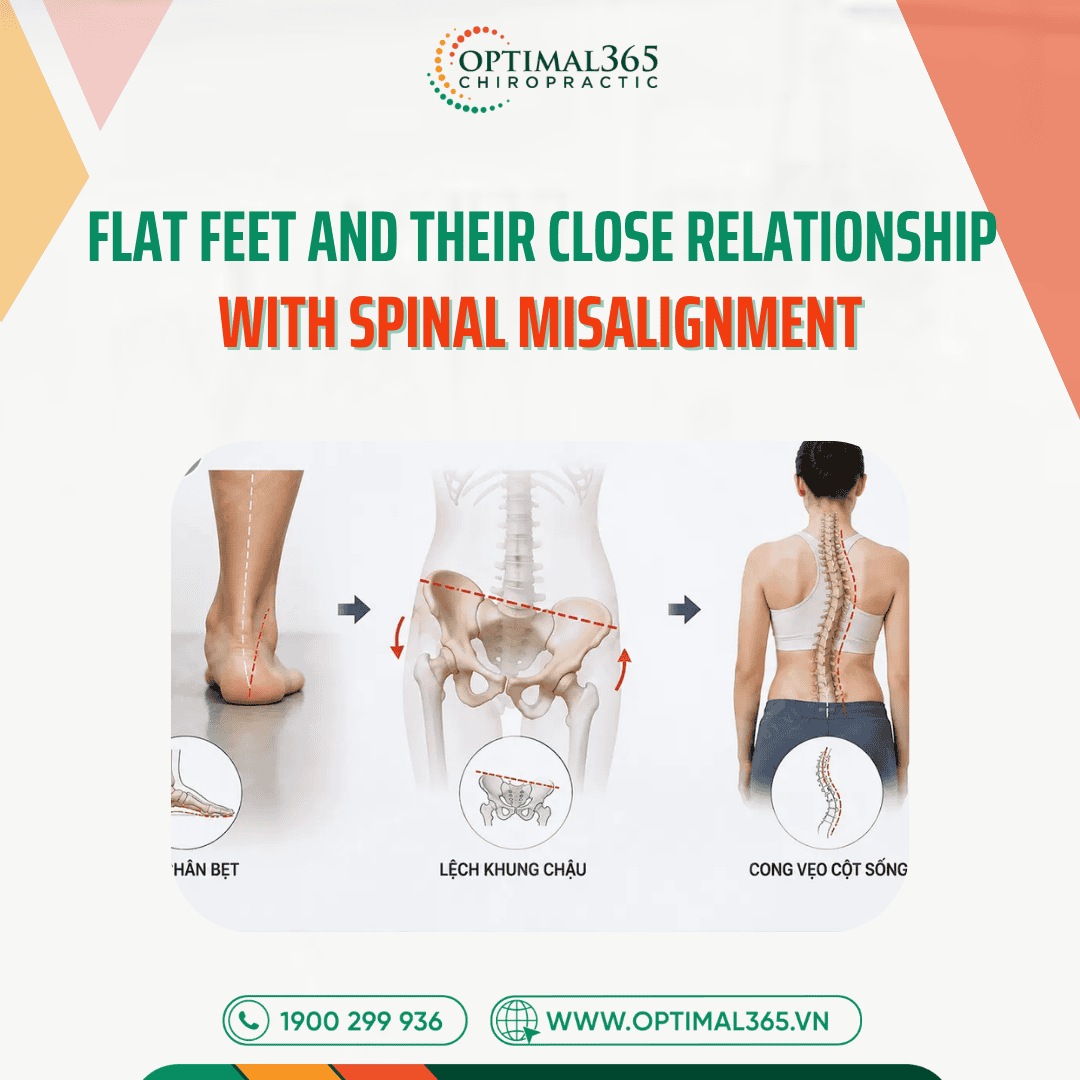
The human body functions as a closed kinetic chain. The feet are the first point of contact with the ground. Flat feet are often accompanied by overpronation (inward rolling of the foot). This rotation causes the tibia to turn inward, affects the knee joint, tilts the pelvis, and ultimately alters the natural curves of the spine.
Flat feet and spinal misalignment are typically linked through the following mechanisms:
- Uneven force distribution between the two feet causing pelvic tilt
- Changes in the lumbar curve (increased or decreased lordosis)
- Uneven muscle tension in the back and neck
- Worsening of existing spinal curvature or chronic low back pain if not addressed early
Many clinical studies have noted that people with flat feet have a higher risk of lower back pain, sacroiliac joint dysfunction, and posture-related spinal issues.
Signs That Flat Feet Are Affecting the Spine
Not everyone with flat feet will immediately develop spinal misalignment, but certain warning signs deserve attention:
- Foot fatigue, knee pain, or hip pain after prolonged standing or walking
- Dull lower back pain, especially at the end of the day
- Standing posture with one shoulder or hip lower than the other
- Easy fatigue when walking or exercising
- Shoes wearing down unevenly on the inner side
When these symptoms appear together, the interaction between flat feet and spinal misalignment is likely significant.
Long-Term Effects If Not Properly Managed
If flat feet persist without adequate support, the body continuously compensates. This can lead to:
- Earlier degeneration of the knee and hip joints
- Chronic lower back pain
- Increased risk of spinal curvature or worsening of existing conditions
- Postural disorders and reduced movement efficiency
The impact is especially noticeable in older adults or those who stand and walk for long periods.
How to Support and Improve the Flat Feet – Spine Connection
Intervention should be comprehensive rather than focusing only on the feet or the spine in isolation.
Supporting the feet
Using appropriate orthotic insoles helps support the arch, reduce overpronation, and improve force distribution. Combining them with stable, arch-supporting shoes is recommended.
Improving posture and spinal alignment
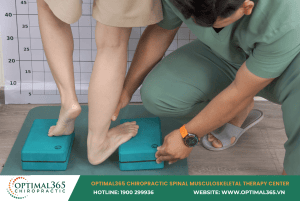
Posture screening, assessment of spinal deviation, and identification of muscle imbalances help determine the extent of the problem. Core-strengthening exercises, stretching, and postural correction play an important role.
Early monitoring and intervention
Early detection helps limit the chain of effects from the feet up to the spine. People with flat feet should proactively have their posture checked regularly, especially if they already experience back or knee pain.
Conclusion
Flat feet and spinal misalignment are not separate issues. They are closely linked through the body’s biomechanical chain. Early recognition, proper foot support, and attention to spinal posture can help reduce pain, limit complications, and maintain better long-term mobility.
If you frequently experience foot pain, knee pain, or back pain without a clear cause, consider a comprehensive evaluation from the feet to the spine. Timely and properly directed intervention will deliver more sustainable results than treating isolated symptoms alone.