Explore the connection between gait, breathing, and posture through the roles of the psoas major, diaphragm, and spinal stabilizing muscles.
Table of content
ToggleWalking and Breathing: The Relationship Between Posture, the Diaphragm, and Movement Capacity
Walking and breathing are two activities that occur almost automatically in daily life. However, from an anatomical and biomechanical perspective, they are more closely related than most people realize.
When we walk, the body does not rely solely on the leg muscles to move forward. The spine, pelvis, core muscles, and respiratory system all participate in maintaining balance, controlling posture, and meeting the demands of movement.
Notably, the psoas major and the diaphragm share an anatomical relationship at the lumbar spine. This region also plays an important role in postural control and trunk stability.
Understanding this connection helps us better recognize how prolonged sitting, limited physical activity, and musculoskeletal issues can affect everyday function.
1. How Do the Hip Muscles Influence Gait?
Walking is a complex motor activity that requires the simultaneous contribution of multiple muscle groups. Among them, the muscles surrounding the hip joint play a key role in generating force, controlling movement, and maintaining pelvic stability.
Each muscle group has a specific function:
- Gluteal muscles: Support pelvic stability, control hip movement, and generate forward propulsion.
- Deep hip rotators: Help control femoral rotation and contribute to hip joint stability.
- Hip adductors: Assist in controlling the direction of the leg and stabilizing the lower limb during the gait cycle.
- Hamstrings: Participate in controlling leg movement, particularly during the late swing phase before the foot contacts the ground.
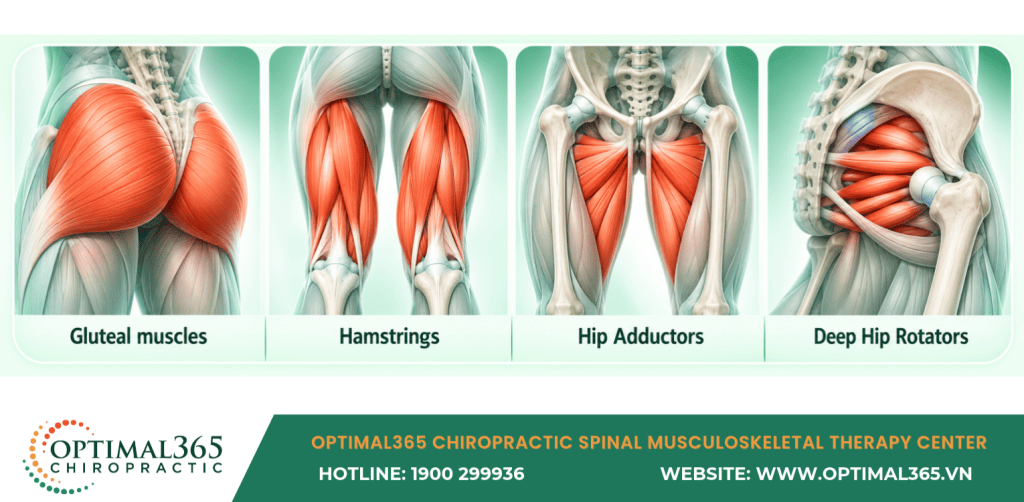
When these muscle groups function effectively, the body can maintain a stable gait and distribute force appropriately across the joints.
Conversely, if one muscle group experiences reduced strength, limited flexibility, or inefficient activation, other muscles may increase their activity to compensate. Over time, this compensation can alter movement patterns and increase load on certain musculoskeletal structures.
In people who sit for prolonged periods, maintaining a flexed hip position for many hours may reduce the joint’s ability to move through its full range. When combined with low physical activity, the strength and control of the gluteal muscles may also decline.
These changes affect how the pelvis and lumbar spine coordinate during walking. This is one reason why hip mobility should be considered when assessing postural issues and lower back discomfort.
Understanding how hip mobility influences gait also helps clarify the relationship between walking and breathing, posture, and overall movement control.
2. The Anatomical Relationship Between the Psoas Major and the Diaphragm
One important point when examining the link between walking and breathing is the anatomical relationship between the psoas major and the diaphragm.
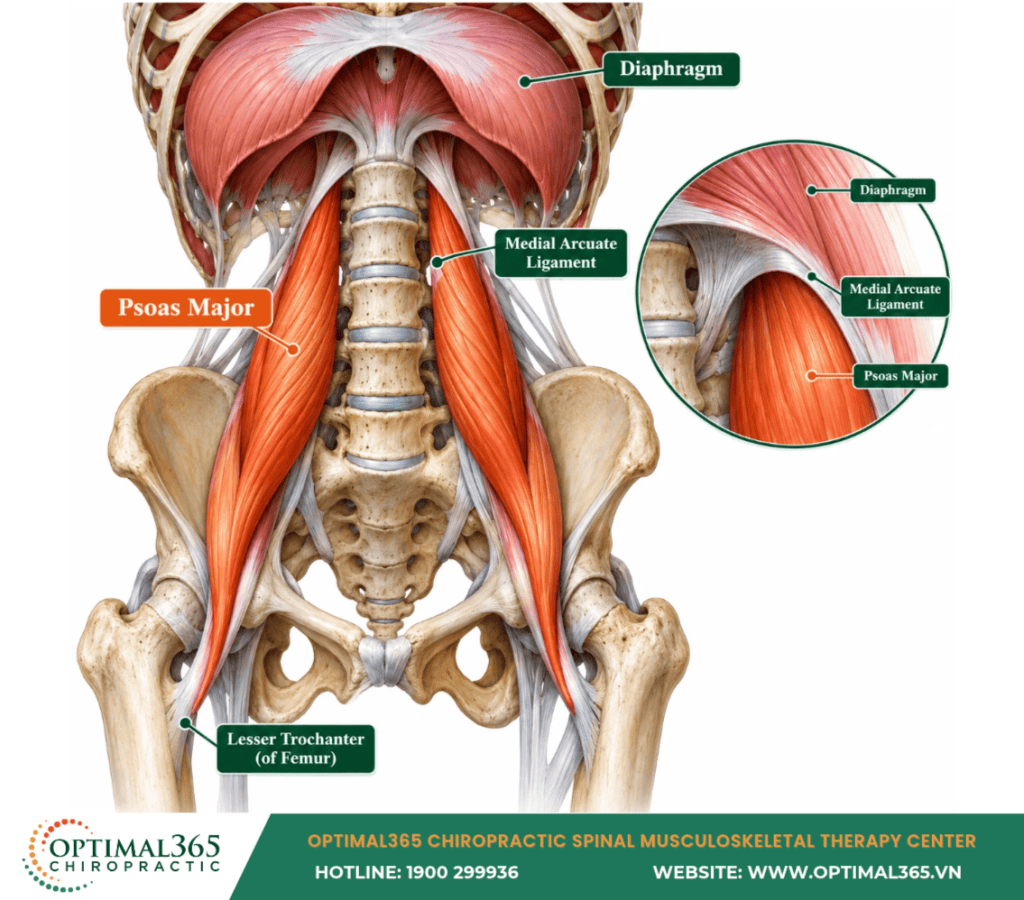
The Psoas Major and Its Role in Movement
The psoas major is a deep muscle located in the posterior abdominal region. It originates from the lumbar vertebrae and inserts on the lesser trochanter of the femur (KenHub – Psoas Major).
Its primary function is hip flexion, which helps bring the thigh forward during movement. In addition, the psoas major contributes to controlling the position of the lumbar spine and pelvis, depending on posture and the activity being performed.
During the gait cycle, the psoas major is particularly important in the phase of advancing the leg forward. Its function is closely related to hip range of motion and control of the lumbar–pelvic region.
The Diaphragm and Spinal Stability
The diaphragm is the primary respiratory muscle. It creates pressure changes within the thoracic cavity to support inhalation and exhalation.
Anatomically, the diaphragm has attachment points in the lumbar region. In particular, the medial arcuate ligament passes over the psoas major and serves as an attachment site for part of the diaphragm.
As a result, these two muscles share a structural and fascial relationship in the lumbar area.
Beyond its respiratory role, the diaphragm also helps regulate intra-abdominal pressure. When coordinated with the abdominal muscles, pelvic floor, and spinal stabilizers, the diaphragm contributes to trunk control during movement.
This becomes especially relevant during activities that require both balance and continuous breathing, such as walking, climbing stairs, or carrying objects.
However, it is important to distinguish between anatomical connection and direct cause-and-effect. There is currently insufficient evidence to conclude that tightness in the psoas major directly restricts diaphragm function, or vice versa.
The function of both muscles is influenced by multiple factors, including neuromuscular control, posture, physical activity levels, and individual health status.
In individuals with structural spinal variations, such as scoliosis, changes in trunk shape may also affect the mechanics of the rib cage and spine, depending on the degree of curvature.
3. The Role of Breathing in Postural Control and Movement
Most people only pay attention to breathing when they feel short of breath or fatigued after activity. However, diaphragm function is also related to trunk stability.
During inhalation, the diaphragm contracts and descends, increasing the volume of the thoracic cavity. At the same time, the change in intra-abdominal pressure helps support spinal stability when coordinated with the core muscles.
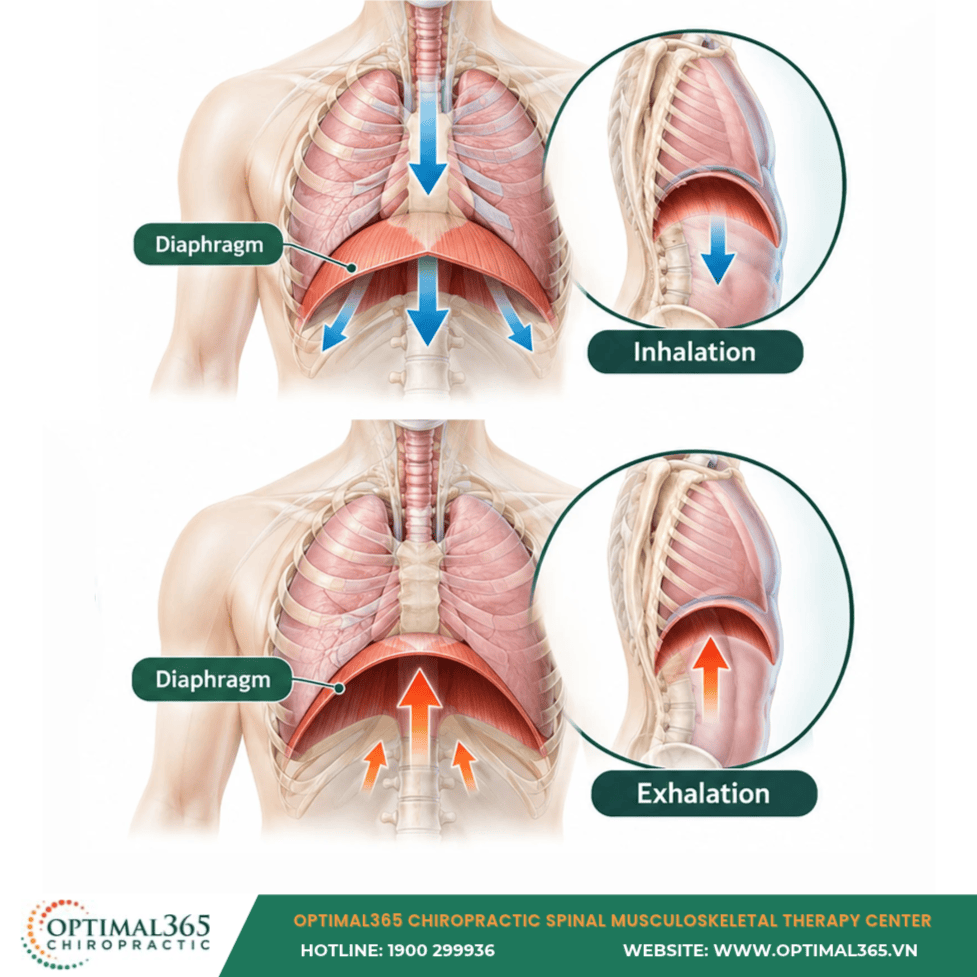
While walking, the body must continuously adjust its center of mass and control movement between the upper body, pelvis, and legs. Diaphragm activity needs to meet both respiratory demands and postural control requirements.
If breathing patterns change — for example, becoming rapid, shallow, or overly reliant on accessory respiratory muscles — activity in the neck and shoulder muscles may also increase.
In some individuals, this can contribute to tension in the neck and shoulder region, especially when combined with prolonged stress or limited postural variation.
Research on the diaphragm’s role in postural control has shown that it participates in trunk stabilization (Hodges et al., 1997). However, the extent of its influence on gait and musculoskeletal symptoms varies from person to person.
4. Walking Also Depends on Vision and Balance
Beyond the musculoskeletal and respiratory systems, maintaining a stable gait also requires coordination from the nervous system.
During movement, the brain continuously receives information from three primary systems:
- Visual system: Helps recognize space, direction of movement, and obstacles ahead.
- Vestibular system: Provides information about head position and movement, contributing to balance.
- Proprioceptive system: Receives signals from muscles, tendons, and joints to determine the position of body parts in space.
Through the coordination of these systems, we can adjust our steps on uneven surfaces, change direction, or respond to unexpected situations.
At the same time, the nervous system regulates muscle activity and breathing rate according to the intensity of movement.
Effective walking therefore depends not only on leg strength. It is the result of coordination among multiple systems, including the musculoskeletal, respiratory, neurological, and balance systems.
The relationship between walking and breathing should therefore be considered alongside sensory feedback, balance, and neuromuscular control when assessing movement.
5. Why Should We Pay Attention to the Relationship Between Walking, Posture, and Breathing?
In clinical practice, movement capacity is one of the key factors when assessing musculoskeletal function.
A person may have difficulty walking not only because of leg pain, but also due to limited hip mobility, reduced muscle strength, impaired balance, or decreased physical endurance.
These factors directly affect daily activities, from climbing stairs and commuting to shopping or participating in sports.
For this reason, rehabilitation planning should consider overall movement capacity rather than focusing solely on the site of pain.
For example, in someone with prolonged lower back pain, a clinician may also need to assess hip range of motion, gluteal strength, trunk control, and gait-related factors.
In cases where breathing patterns appear altered or endurance is reduced, respiratory function may also be considered as part of the evaluation.
The ultimate goal is not only to improve strength or range-of-motion measurements, but to help individuals perform necessary daily activities more effectively.
6. How Do Prolonged Sitting and Stress Affect the Body?
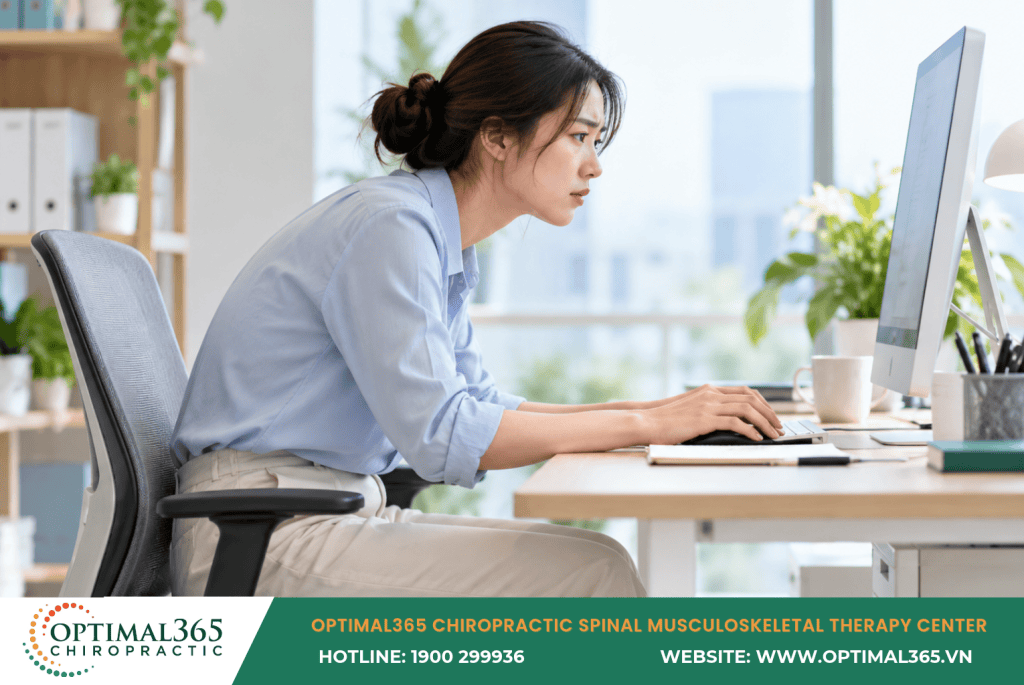
For office workers, sitting for long hours is one of the factors that can contribute to discomfort in the neck, shoulders, back, and hips.
Limited movement from prolonged sitting
While sitting, the hip remains in a flexed position, and the spine and core muscles often stay relatively static.
Without sufficient physical activity to counteract this, the body may gradually reduce its ability to adapt to movements that require greater range, such as hip extension or trunk rotation.
Prolonged sitting does not automatically mean that muscles will shorten or weaken. However, long-term inactivity can contribute to reductions in strength, endurance, and flexibility of the musculoskeletal system.
The effect of stress on breathing patterns
Psychological stress can also influence respiratory activity through the autonomic nervous system.
Under stress, some people tend to breathe more rapidly and shallowly, increasing the use of accessory respiratory muscles.
If this continues, it may be accompanied by feelings of tightness in the neck, shoulders, and upper chest.
That said, not every case of neck and shoulder pain originates from an inefficient breathing pattern. Musculoskeletal symptoms are usually influenced by multiple factors at once, including physical activity, sleep, stress levels, and existing health conditions.
Rather than trying to maintain a supposedly perfect posture, it is more important to change positions regularly, stay active, and adjust the work environment to suit the body.
Regular movement breaks and comfortable breathing habits can support the natural coordination of walking and breathing, particularly for office workers with sedentary routines.
7. Ways to Improve Gait and Support Respiratory Function
The coordination between walking and breathing can be supported through regular movement, improved muscle strength, and appropriate daily habits.
Maintain a walking habit
Regular walking helps activate the lower limb muscles, supports cardiovascular health, and maintains physical endurance.
When walking, choose a pace appropriate for your condition, keep the torso relaxed, and allow breathing to occur naturally.
It is not necessary to match a fixed number of steps to each inhale or exhale. Breathing should adjust according to movement intensity and comfort.
Practice diaphragmatic breathing
Diaphragmatic breathing exercises can help individuals become more aware of and adjust their breathing pattern, especially in cases of shallow breathing or excessive use of accessory muscles.
This can be practiced while lying on the back or sitting comfortably: inhale slowly through the nose and feel the lower rib cage expand, then exhale gently without forcing the abdomen or pushing the air out excessively.
Exercises should remain within a comfortable range. If dizziness or discomfort occurs, stop and adjust the approach.
Improve hip strength and mobility
Strengthening the gluteal muscles, thigh muscles, and trunk stabilizers can support better movement control.
Maintaining hip and thoracic spine mobility is also important for activities such as walking, bending, rotating the trunk, and climbing stairs.
Depending on musculoskeletal condition, training programs should be adjusted in intensity, repetitions, and difficulty.
Change working postures regularly
For people who work at a desk, it is advisable to stand up and move after periods of continuous sitting.
Changing positions, walking for a few minutes, or performing light on-the-spot movements helps the body avoid remaining in one position for too long.
Attention should also be given to desk and chair height, screen position, and overall workstation setup to reduce prolonged uncomfortable postures.
Seek professional assessment for persistent symptoms
If lower back pain, hip tightness, neck and shoulder discomfort, or limited mobility persist, a professional evaluation is recommended to identify contributing factors.
In musculoskeletal care settings, assessment may include posture analysis, range-of-motion testing, muscle strength evaluation, gait observation, and neurological screening when necessary.
Depending on the findings, a care plan may combine chiropractic care, physiotherapy, deep muscle work, and rehabilitation exercises.
Each approach has its own goals and indications. Coordination should be based on clinical presentation, movement needs, and individual response.
Learn more about chiropractic services and musculoskeletal care at Optimal365.
8. Conclusion
Walking and breathing are connected through the muscular system, spinal and pelvic structures, and the neurological mechanisms that control posture.
The psoas major contributes to hip movement and lumbar–pelvic stability, while the diaphragm is responsible for respiration and also supports trunk control.
Although these muscles share anatomical and functional relationships, their activity should not be viewed as the direct cause of every postural, gait, or breathing issue.
To maintain good movement capacity, attention should be given to muscle strength, joint mobility, endurance, and daily habits.
Regular walking, frequent posture changes during work, and appropriate exercise are simple yet valuable long-term measures for musculoskeletal health.
When pain persists or movement becomes limited, proper assessment and identification of contributing factors will help guide suitable care, rather than focusing only on symptoms at a single location.