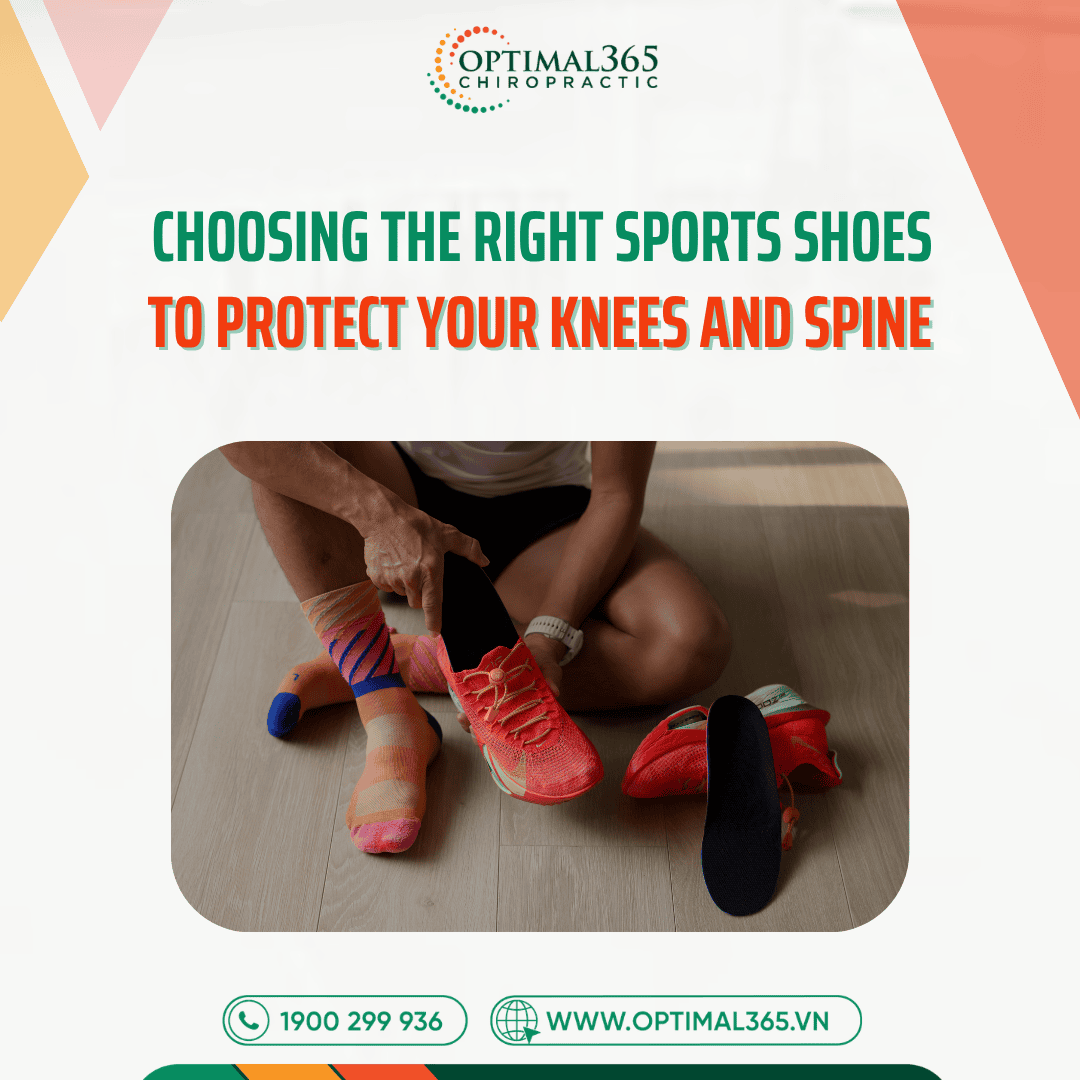
Choosing the Right Sports Shoes to Protect Your Knees and Spine
Many people focus on workouts, nutrition, or exercise posture but overlook an equally important factor: choosing the right sports shoes. Ill-fitting shoes can create uneven force distribution through the feet, which directly affects the knees, hips, and spine. Selecting and using sports shoes scientifically not only improves training performance but also reduces the risk of pain, injury, and long-term musculoskeletal problems.
Why Sports Shoes Affect the Knees and Spine
The feet form the foundation of the entire movement system. When shoes lack proper fit, cushioning, or stability, impact forces from the ground are transmitted unevenly to the knees and spine. Over time, this can lead to knee pain, lower back pain, joint misalignment, or worsen existing degenerative conditions.
People who frequently run, train at the gym, play sports, or walk for long hours each day should pay special attention to choosing the right sports shoes. Good shoes help absorb impact, keep the feet stable, and maintain the natural curves of the spine during movement.
Read more: Knee Sprain: Causes, Symptoms, and Effective Treatment at Optimal365 Chiropractic
Key Criteria for Choosing the Right Sports Shoes
1. Match Your Foot Shape and Activity Type
Everyone has a different foot structure: flat feet, high arches, or neutral arches. Sports shoes should fit snugly without being too tight (which causes pressure) or too loose (which allows the foot to slide inside). In addition, choose shoes according to the specific activity, such as running, gym training, or court sports.
2. Good Cushioning and Shock Absorption
The midsole plays a crucial role in reducing impact forces on the knees. Shoes with quality cushioning help distribute force more evenly, lowering pressure on the knees and spine when the foot hits the ground. However, overly soft cushioning can reduce stability, so a balance between comfort and support is essential.
3. Stability and Arch Support
Shoes with proper arch support help maintain correct foot posture and limit excessive flat-foot collapse or inward rolling (overpronation). This is a key factor in protecting the knees and reducing load on the lower spine.
4. Weight and Breathability
Heavy shoes can cause leg muscle fatigue, while lightweight and breathable shoes keep the feet more comfortable during prolonged activity. Prioritize materials with good stretch and effective moisture-wicking to reduce stuffiness and create a better environment for the feet.
The Role of Orthotic Insoles When Wearing Sports Shoes
In addition to choosing the right sports shoes, many people add orthotic insoles to further protect the joints and spine. Orthotic insoles are designed to support the arch, adjust contact points, and distribute force more evenly during movement.
For people with flat feet, high arches, or a history of knee pain or heel pain, orthotic insoles can help:
- Reduce pressure on the knees when running or walking
- Limit incorrect foot rolling
- Improve stability on landing
- Support better spinal posture during activity
However, not every insole suits everyone. Choose ones with moderate firmness that follow the natural curve of the foot, ideally based on professional advice. Combining properly selected sports shoes with suitable orthotic insoles provides more comprehensive protection for the musculoskeletal system.
Common Mistakes to Avoid When Choosing Sports Shoes
Many people continue wearing shoes with heavily worn-out soles, choose shoes based only on appearance, or buy the wrong size. Others use the same pair for every activity without considering the specific purpose. These mistakes reduce the shoes’ shock-absorption ability and increase the risk of knee and spinal pain over time.
Replace sports shoes regularly when the sole shows clear wear or cushioning feels significantly reduced. Also, try shoes in the afternoon (when feet are slightly swollen) and walk a few steps to assess the real fit.
Conclusion
Choosing the right sports shoes is a simple yet crucial step to protect the knees and spine during daily physical activity. When combined with suitable orthotic insoles, you create a solid foundation that reduces impact forces, maintains better posture, and helps prevent long-term musculoskeletal problems.
Treat the selection of shoes and foot-support accessories as part of a proactive health care habit. A well-chosen pair of shoes not only improves training efficiency but also helps keep your knees and spine protected over the long term.