The knee joint is one of the largest load-bearing joints, supporting the weight of the entire body, especially during walking, running, or carrying objects. Therefore, physical therapy exercises for the knee joint are essential to protect this hinge joint. Join Optimal365 Chiropractic to explore 9 exercises through this article!
Functions of the Knee Joint and Why Physical Therapy Exercises for the Knee Joint Are Needed?
Functions of the Knee Joint
The knee joint is one of the largest and most important joints in the body, responsible for numerous locomotor activities and body weight support. The main functions of the knee joint include:
- Supporting movement: The knee joint allows flexion-extension movements, slight rotation, facilitating activities such as walking, running, jumping, and standing up or sitting down.
- Load-bearing and shock absorption: When standing, walking, or running, the knee joint must withstand significant pressure from body weight, which can be 3-5 times the body weight during running or jumping.
- Body stabilization: The ligament system and surrounding muscles around the knee joint help maintain joint stability, prevent dislocation, and protect against injury.
- Shock reduction and bone protection: Articular cartilage and synovial fluid reduce friction between joint surfaces, absorb impacts, and protect bones from wear.
You might also be interested in: Knee muscle strain – Symptoms and treatment for athletes
Why Physical Therapy Exercises for the Knee Joint Are Needed?
The knee joint is prone to injury due to high pressure from daily activities, sports injuries, osteoarthritis, or other musculoskeletal issues. Physical therapy exercises play a crucial role in:
- Strengthening muscles around the knee joint: Quadriceps, hamstrings, and surrounding muscles stabilize the joint and reduce pressure on cartilage.
- Improving flexibility and range of motion: Exercises help maintain or restore joint mobility, preventing stiffness.
- Reducing pain and inflammation: Proper movement stimulates blood circulation, enhances cartilage nutrition, reduces pain, and lowers the risk of arthritis.
- Preventing injury: Strong and flexible muscles reduce the risk of sprains, ligament tears, or osteoarthritis.
Regular and proper training helps maintain knee joint function, supports recovery after injury, and prevents degenerative issues in the future.
9 Effective Physical Therapy Exercises for the Knee Joint
Quadriceps Stretch
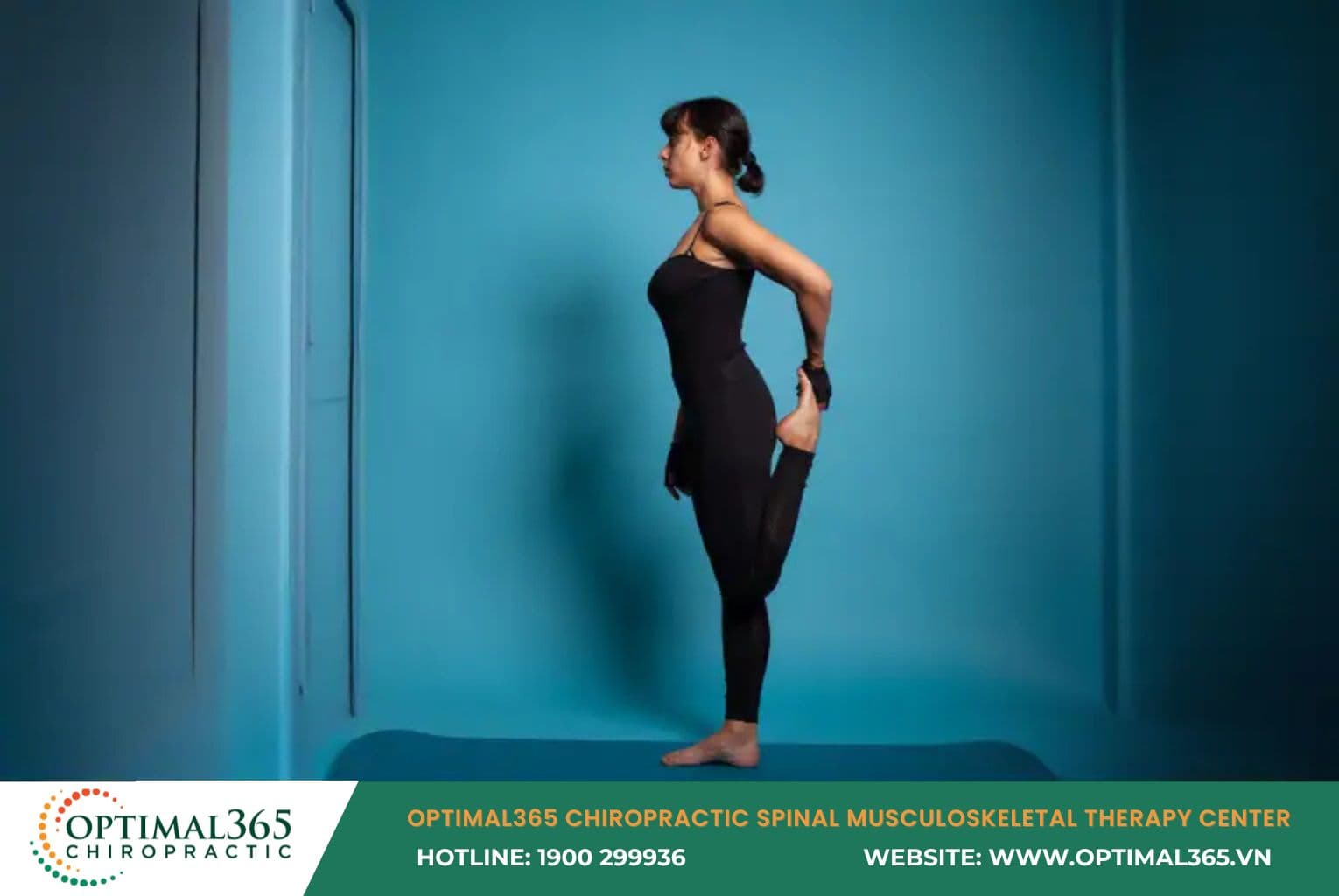
The quadriceps stretch is an important physical therapy exercise for the knee joint, improving flexibility of the quadriceps muscle group and helping reduce pressure on the knee joint. According to musculoskeletal studies, maintaining optimal quadriceps length plays a key role in reducing injury risk and enhancing knee joint locomotor function.
This exercise is performed as follows:
- Stand straight, feet parallel, maintain stable balance. Hold onto a wall or chair if needed for support.
- Use one hand to grasp the ankle of the same side, pulling the heel toward the glutes. Keep the knee pointing downward, not outward.
- Hold the position for 20-30 seconds, feeling the stretch in the front thigh without pain.
- Slowly release the foot, return to the starting position, and repeat with the other leg.
Notes:
- Keep the back straight, do not lean forward.
- If you have a history of ligament injury or knee osteoarthritis, consult a specialist before exercising to avoid excessive joint pressure.
Hamstring Stretch
The hamstring stretch is a physical therapy exercise that improves flexibility of the hamstring muscle group and helps reduce pressure on the knee joint. Additionally, maintaining optimal hamstring length is crucial for improving range of motion and reducing injury risk in the knee and lower back areas.
This exercise is performed as follows:
- Sit upright on the floor, extend one leg straight forward, bend the other leg so the sole rests against the inner thigh of the extended leg.
- Inhale deeply, slowly lean forward, keep the back straight, and reach toward the foot of the extended leg.
- Hold for 20-30 seconds, feeling the stretch in the hamstrings without pain.
- Return to the starting position, switch sides, and repeat with the other leg.
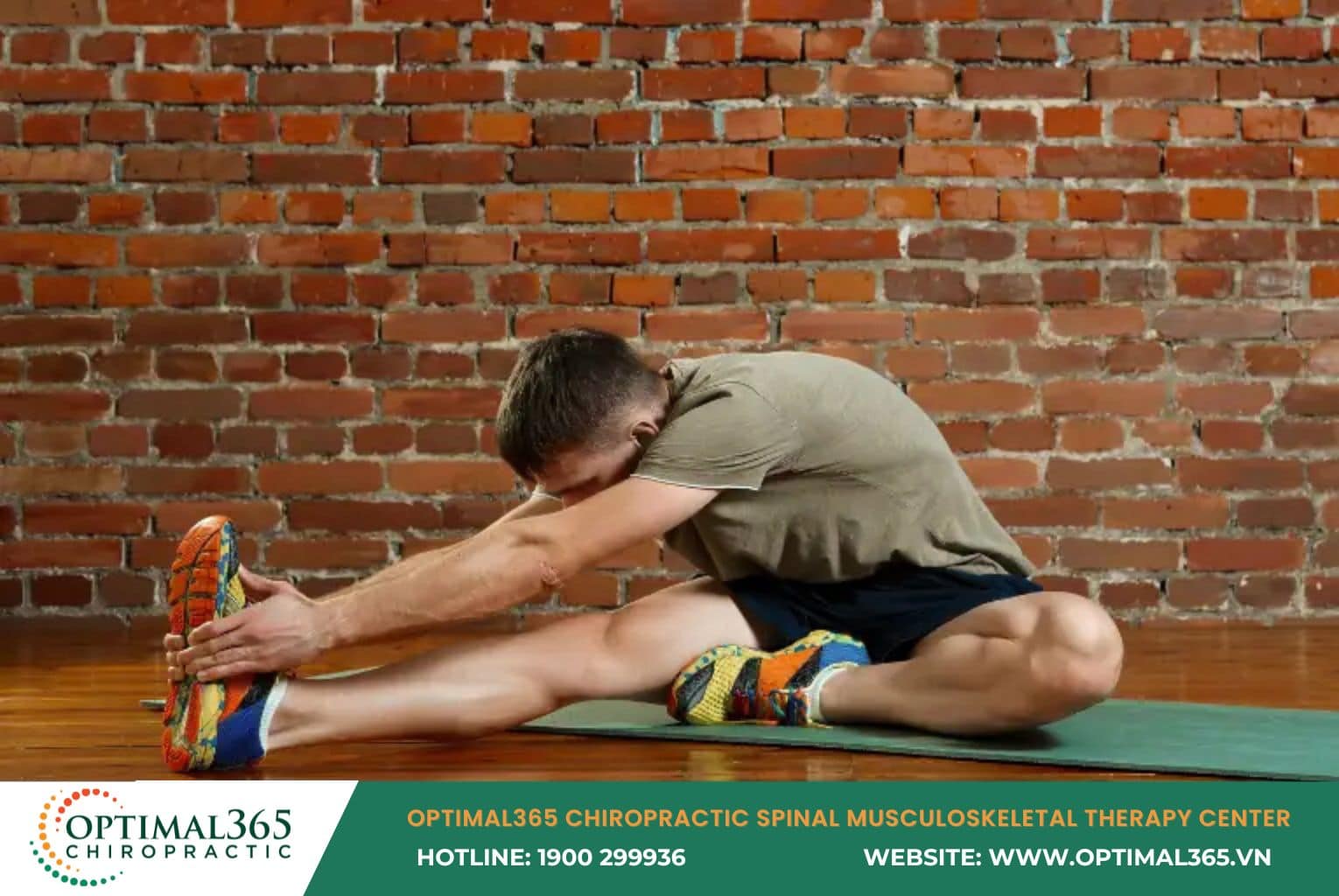
Notes:
- Keep the back straight, do not round the back when leaning to avoid spinal pressure.
- If feeling excessive stretch, slightly bend the knee to reduce pressure.
- Those with hamstring injury history or sciatica should consult a specialist before performing this exercise.
Straight Leg Raise
Straight leg raise is an important physical therapy exercise that strengthens the quadriceps muscle group and supports knee joint stability. According to musculoskeletal studies, maintaining quadriceps strength is crucial for reducing osteoarthritis risk and improving lower limb locomotor function.
This exercise is performed as follows:
- Lie supine on a firm surface, arms along the body. One knee bent, the other leg straight.
- Tighten the front thigh muscle of the straight leg, slowly raise the leg about 30 cm off the floor, keeping the knee straight.
- Hold for 5 seconds, ensuring quadriceps activation without excessive tension.
- Slowly lower the leg, return to start, repeat 10-15 times, then switch sides.
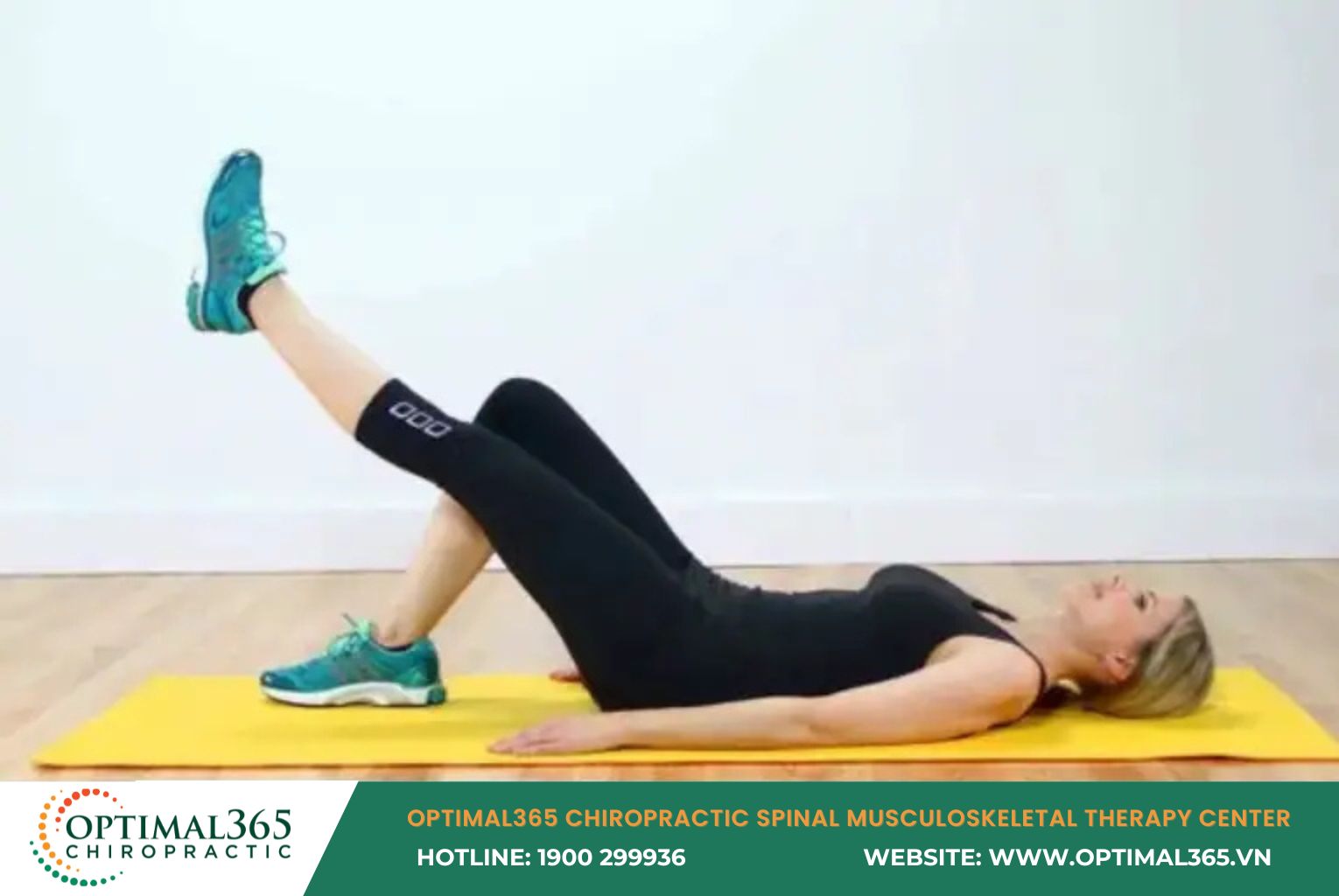
Notes:
- Keep the back straight, do not arch the back off the floor to avoid lumbar pressure.
- If difficult, start with lower range and gradually increase as the body adapts.
- Those with knee injury history or low back pain should consult a specialist before performing.
Seated Knee Extension
Seated knee extension is a physical therapy exercise for the knee joint that improves joint range of motion and strengthens the quadriceps. Maintaining optimal knee extension ability is crucial for functional recovery post-injury and reducing knee osteoarthritis risk.
This exercise is performed as follows:
- Sit on a sturdy chair, feet comfortably on the floor, back straight.
- Slowly extend one leg forward to maximum, keeping the knee straight.
- Hold for 5 seconds, feeling quadriceps contraction without excessive strain.
- Slowly lower the leg, return to start, repeat 10-15 times, then switch sides.
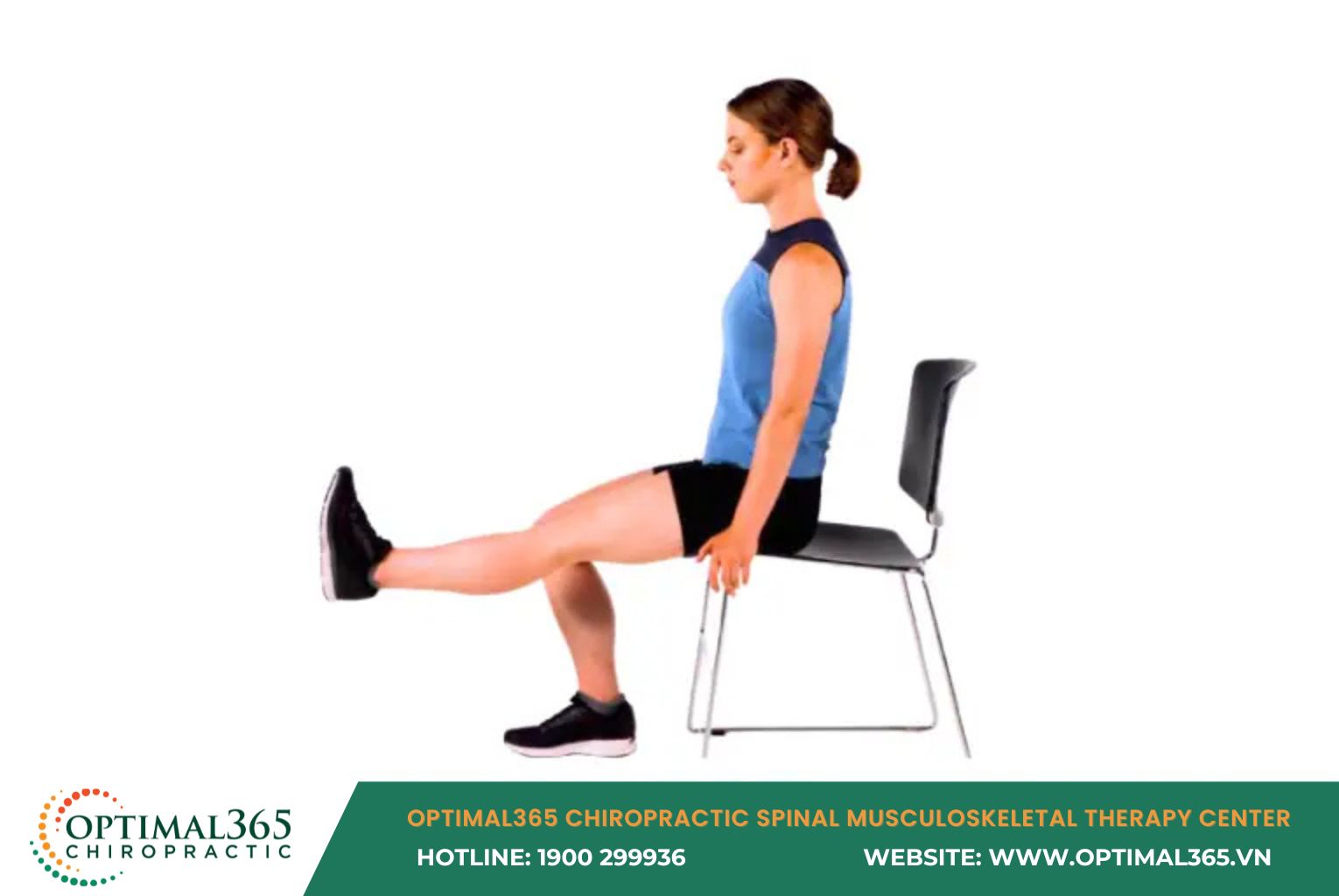
Notes:
- Keep the back straight, avoid leaning back for proper form.
- Ankle weights can be added for increased effectiveness once accustomed.
- Those with knee injury history or extension difficulties should perform under specialist guidance to avoid joint overload.
Step-Ups
Step-ups is a physical therapy exercise that strengthens the quadriceps, glutes, and knee-surrounding muscles. It is commonly recommended in rehabilitation programs to improve mobility and knee joint stability.
This exercise is performed as follows:
- Stand straight in front of a sturdy step or platform, feet parallel, stable balance.
- Place one foot on the step, drive through the supporting leg, push up until both feet are on the step.
- Slowly lower the other foot to the floor, control the movement to avoid heavy knee impact.
- Perform 10-15 times, then switch sides.
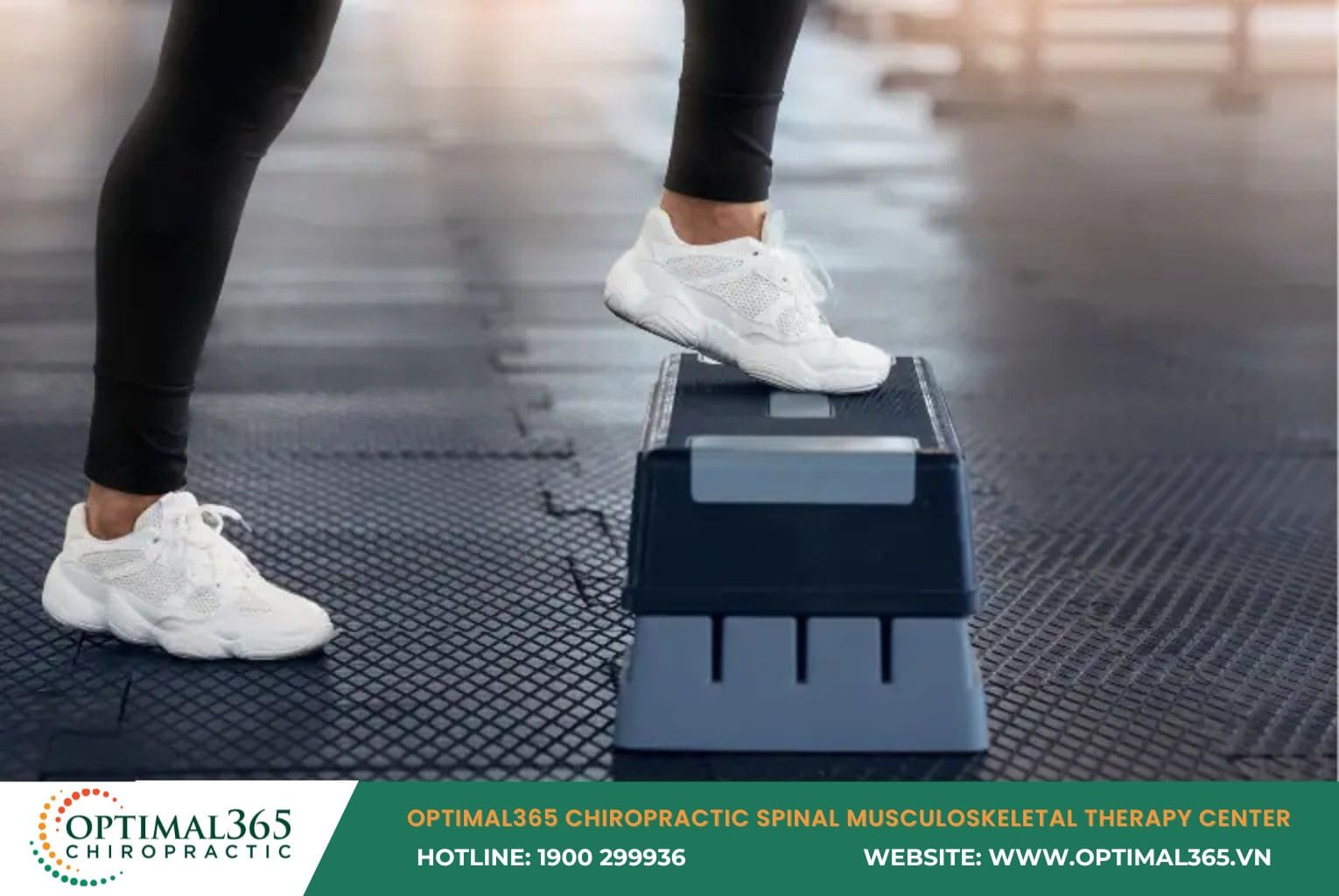
Notes:
- Keep the back straight, do not lean forward when stepping up.
- Ensure full foot placement on the step to avoid excessive knee pressure.
- If knee injury history or stepping difficulty, start with low step and consult specialist.
Partial Squats
Partial squats is the next physical therapy exercise for the knee joint, strengthening quadriceps, glutes, and hamstrings without heavy knee pressure. It is particularly suitable for those wanting to build muscle strength while protecting the knee from injury or pain.
This exercise is performed as follows:
- Stand straight, feet shoulder-width, stable balance. Hold chair or railing if needed.
- Slowly lower body to about 45 degrees, keep back straight, push hips back, weight on heels.
- Hold for 2-3 seconds, feeling quadriceps tension without pain.
- Slowly push back to standing, avoid sudden knee lock.
- Perform 10-15 times based on ability.
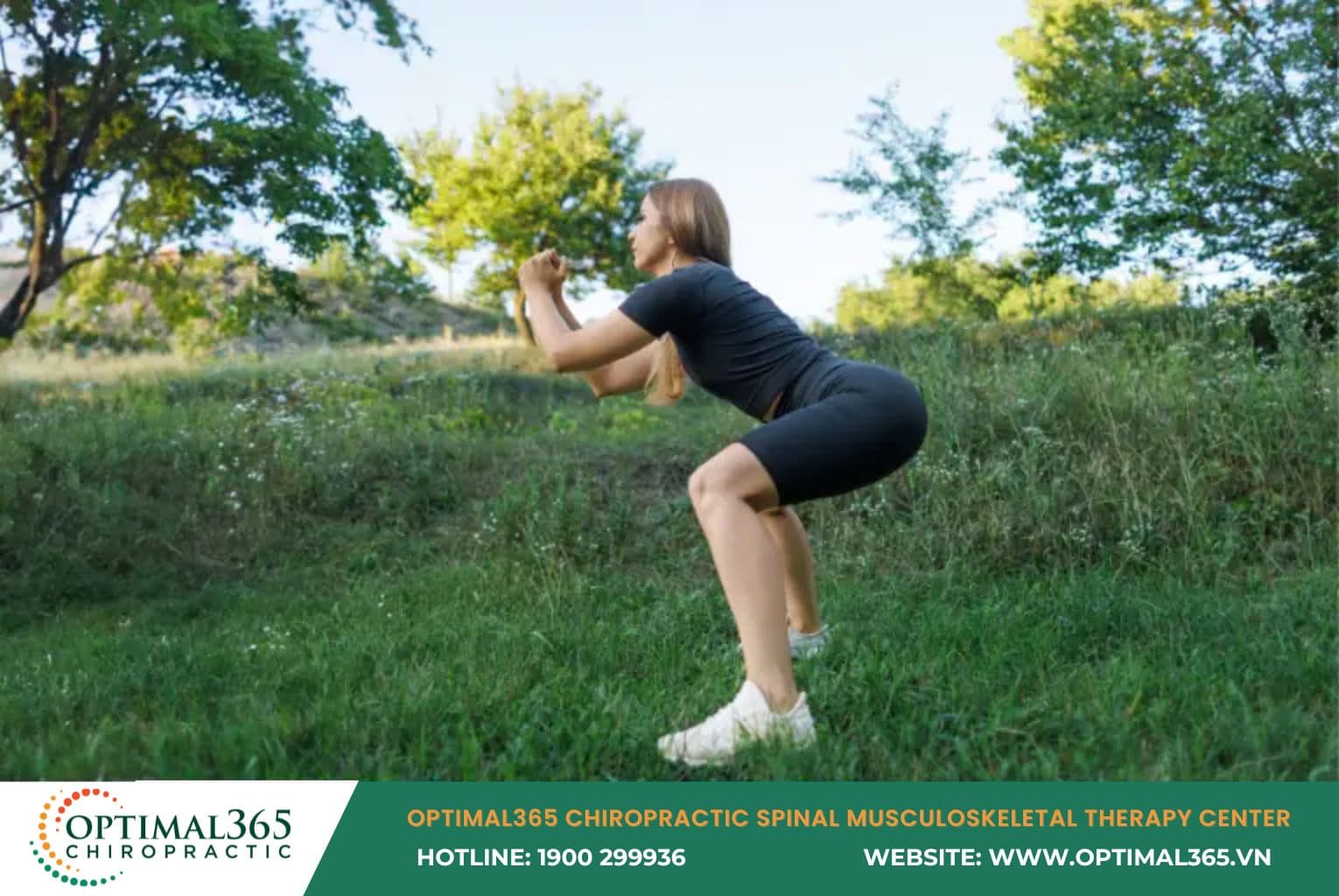
Notes:
- Keep back straight, do not let knees pass toes when lowering.
- Maintain steady breathing, do not hold breath.
- If knee injury history or squat difficulty, start with smaller range and consult specialist.
Glute Bridge
Glute bridge is another physical therapy exercise for the knee joint that activates glutes, hamstrings, and lower back muscles, while reducing knee pressure. Strengthening this muscle group is crucial for hip stability, reducing back pain risk, and improving overall locomotor function.
This exercise is performed as follows:
- Lie supine on a flat surface, knees bent, feet flat on floor hip-width. Arms along body, palms down.
- Tighten glutes and core, slowly lift hips until back, hips, and thighs form a straight line.
- Hold for 5 seconds, feeling glutes and hamstrings working.
- Slowly lower hips, avoid arching or sudden drop.
- Perform 10-15 times based on ability.

Notes:
- Keep back straight, avoid excessive lumbar arch when lifting.
- Drive through heels, not toes, for optimal glute activation.
- If low back pain or hip injury history, consult specialist to avoid improper spinal/knee pressure.
Heel Raises
Heel raises strengthen calf muscles, improve ankle joint stability, and help reduce knee pressure. Maintaining calf strength is crucial for better balance, injury prevention, and flexible movement.
This exercise is performed as follows:
- Stand straight, feet shoulder-width, stable balance. Hold wall or chair if needed.
- Slowly rise onto toes as high as possible, keep back straight, stable center.
- Hold for 2-3 seconds, feeling calf activation.
- Slowly lower heels, do not drop freely.
- Perform 10-15 reps per set, 2-3 sets based on ability.
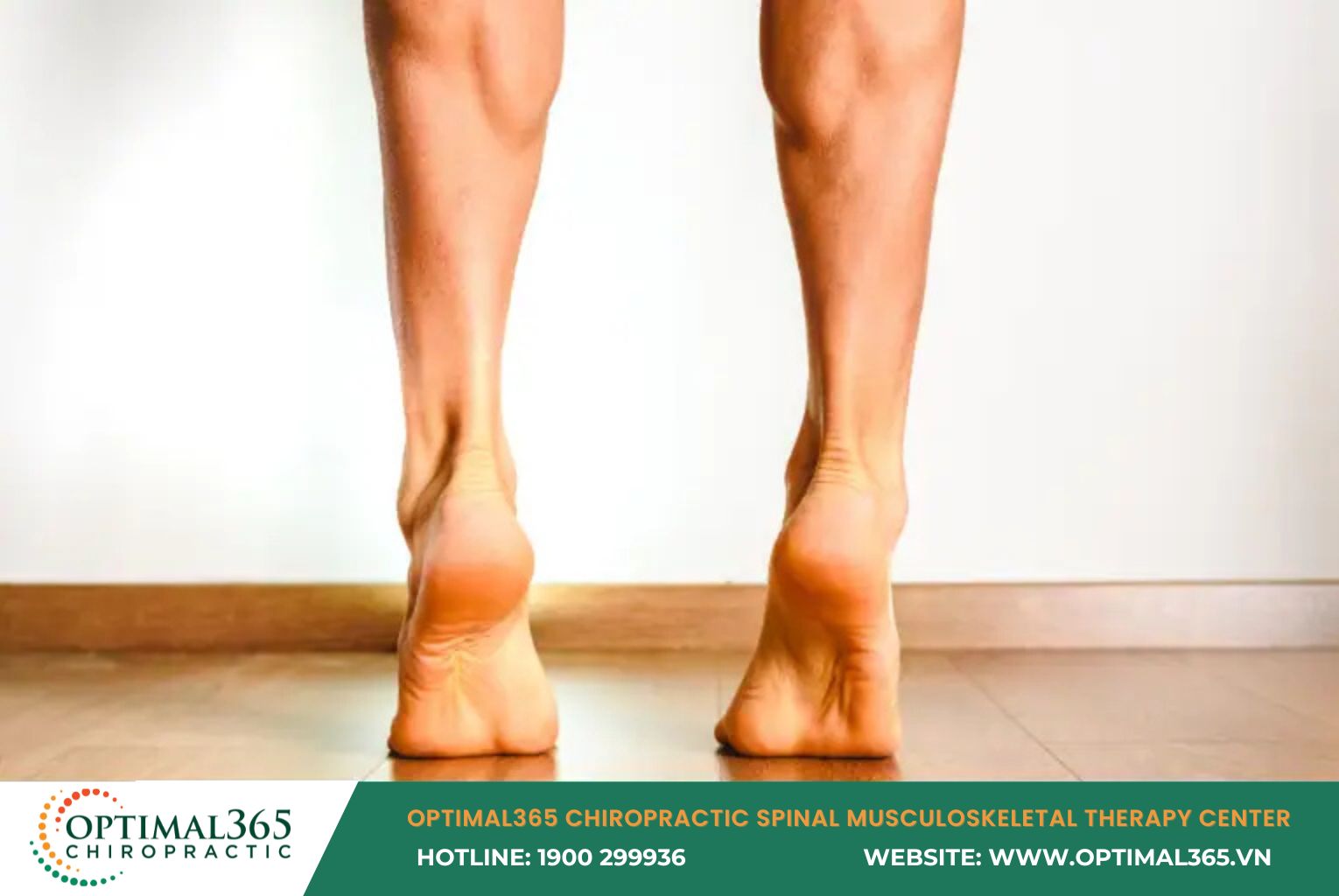
Notes:
- Avoid leaning forward when rising, keep center stable.
- Do not lock knees to avoid excessive joint pressure.
- If ankle injury or knee pain history, consult specialist for safety.
Straight Leg Raise
Straight leg raise is a physical therapy exercise that strengthens quadriceps without heavy knee pressure. Particularly suitable for those with knee pain or in post-injury recovery.
This exercise is performed as follows:
- Lie supine on firm surface, legs straight, arms along body.
- Keep one leg straight on floor, raise the other 30-45 degrees, knee straight.
- Hold for 5 seconds, feeling quadriceps activation.
- Slowly lower, return to start, 10-15 times. Switch legs.
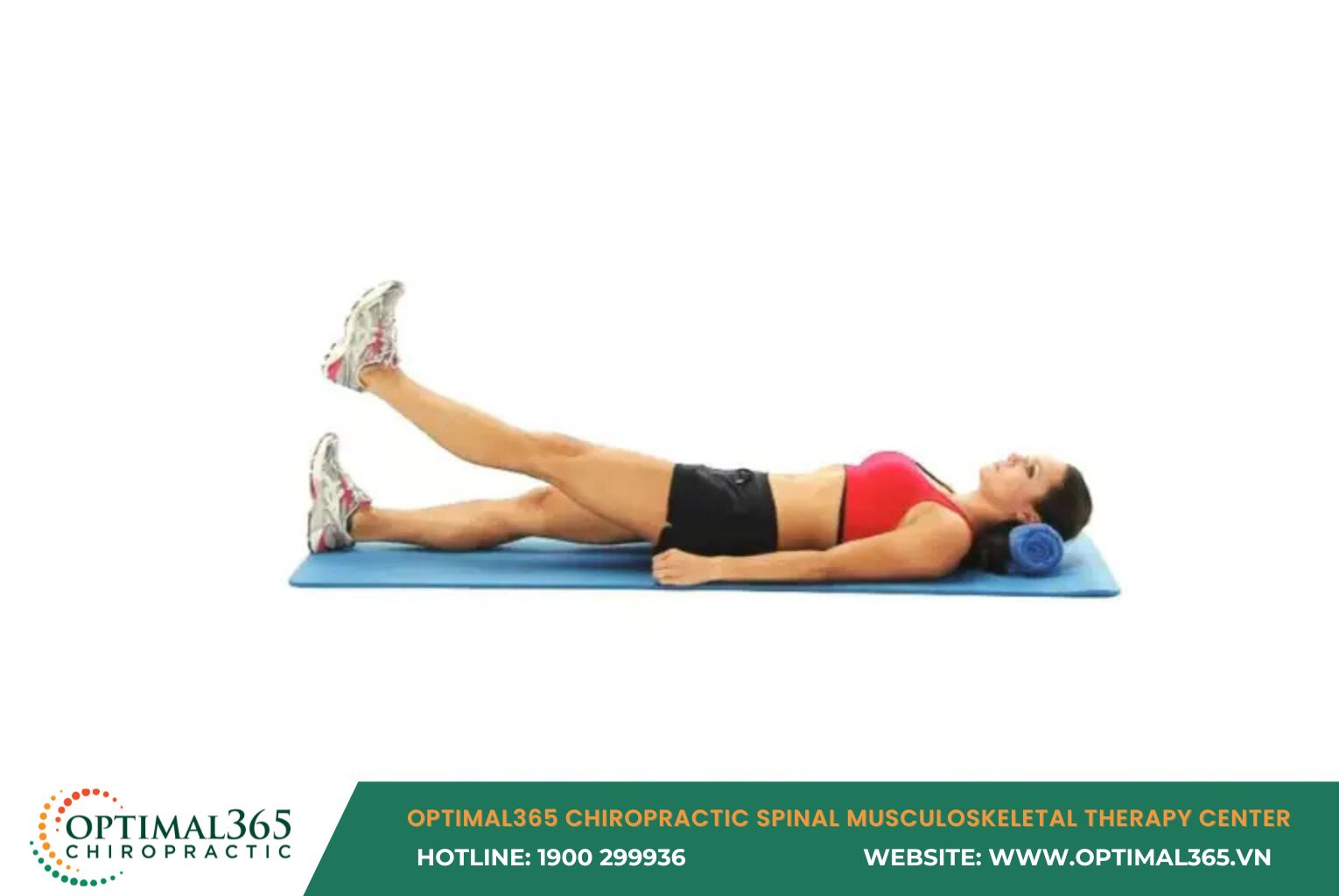
Notes:
- Keep back straight, no arching when lifting.
- Add ankle weights if too easy for progression.
- Those with lumbar issues should consult specialist before exercising.
Some Physical Therapy Exercises Requiring Caution for the Knee Joint
Deep Squats
Deep squats are a popular strength-training physical therapy exercise for the knee joint, strengthening thighs, glutes, and improving knee mobility. However, improper technique or excessive knee flexion can increase pressure on cartilage and ligaments, leading to injury. Controlling squat depth is key to reducing injury risk and optimizing training effectiveness.
This exercise is performed as follows:
- Stand straight, feet shoulder-width, toes slightly out for stability.
- Slowly lower body, back straight, hips back as if sitting on a chair.
- Stop when thighs parallel to floor or knee angle 45-90 degrees. Do not let knees pass toes.
- Drive heels into floor, squeeze thighs and glutes to stand.
- Perform 10-15 times, 2-3 sets based on ability.
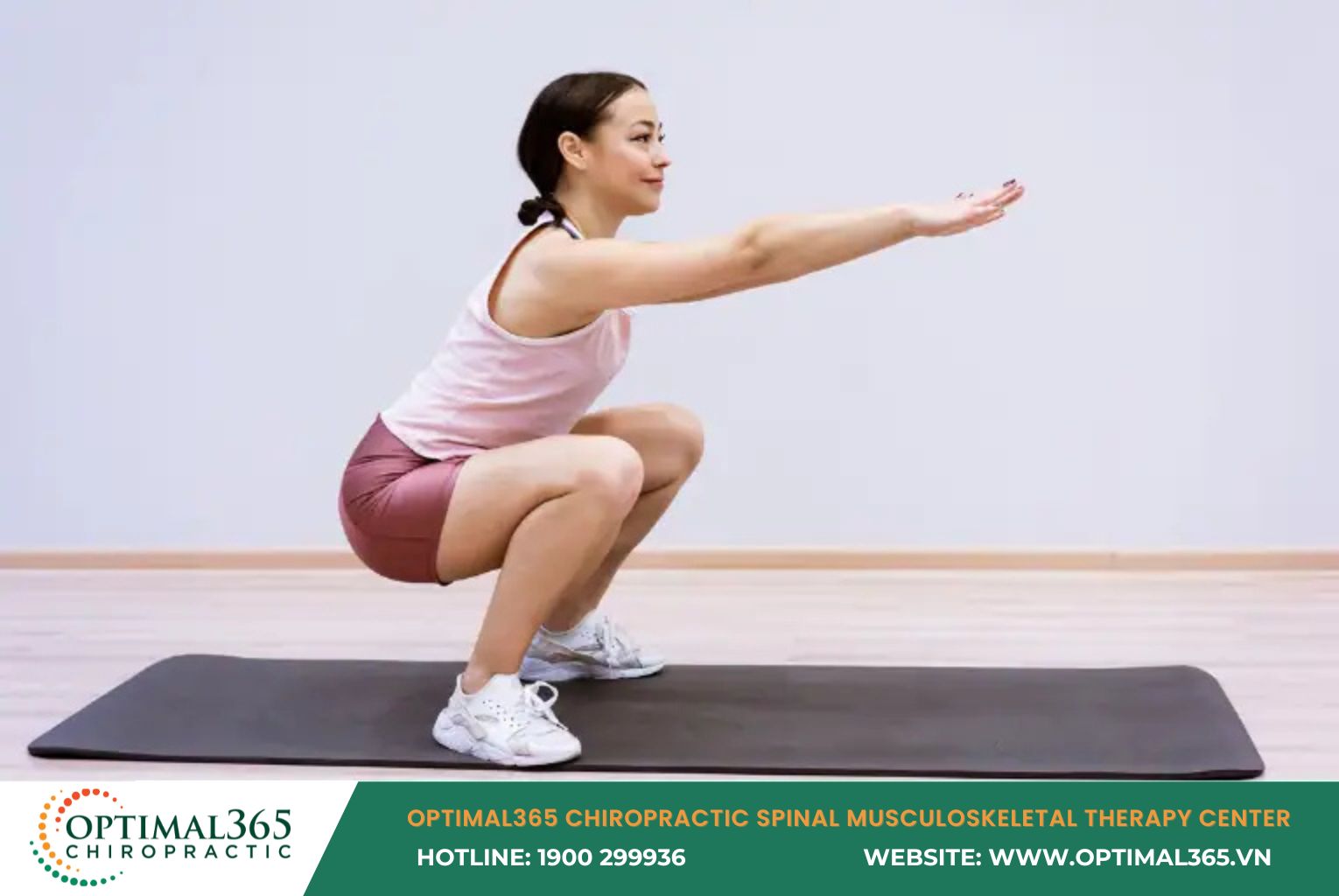
Notes:
- Maintain steady breathing, inhale down, exhale up.
- Avoid deep squats if pain or knee injury history.
- Beginners or balance issues: hold wall or use chair support.
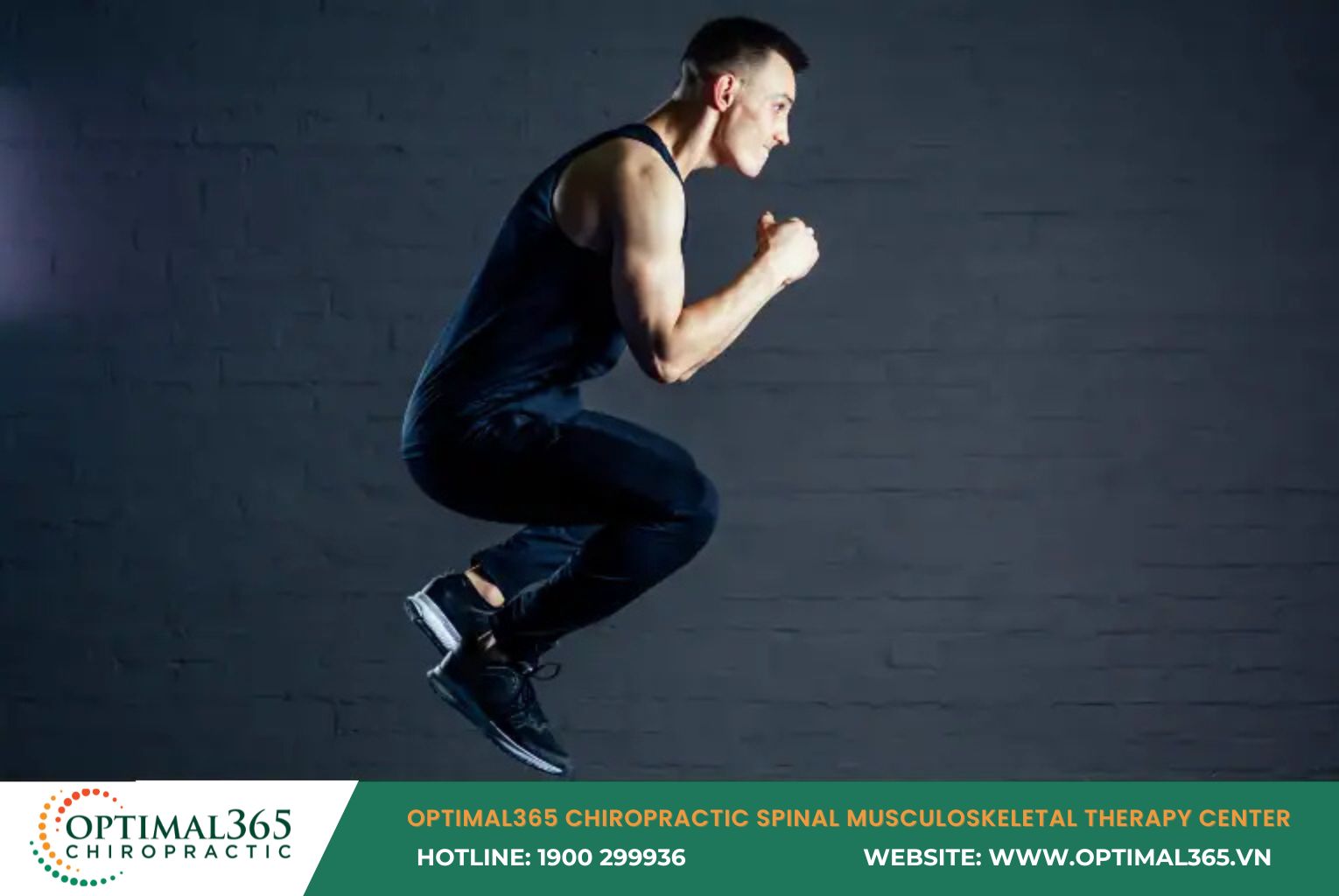
Jumping Exercises (Box Jumps, Burpees, Jump Squats)
Jumping exercises are high-intensity group that strengthens muscles, improves jumping ability, and supports overall fitness. However, poor technique can create heavy knee pressure, increasing ligament injury and arthritis risk.
This exercise is performed as follows:
- Prepare stance feet shoulder-width, balanced body, tight core.
- Jump by driving heels, activating thighs and glutes.
- Land with full foot contact, not just toes, for even force distribution. Knees slightly bent, avoid locking to reduce ligament pressure.
- Control body on landing, knees not caving in. Repeat as able.
Notes:
- Always keep back straight, no arching or shoulder tension.
- If knee/ligament injury history, reduce jump height and consult specialist.
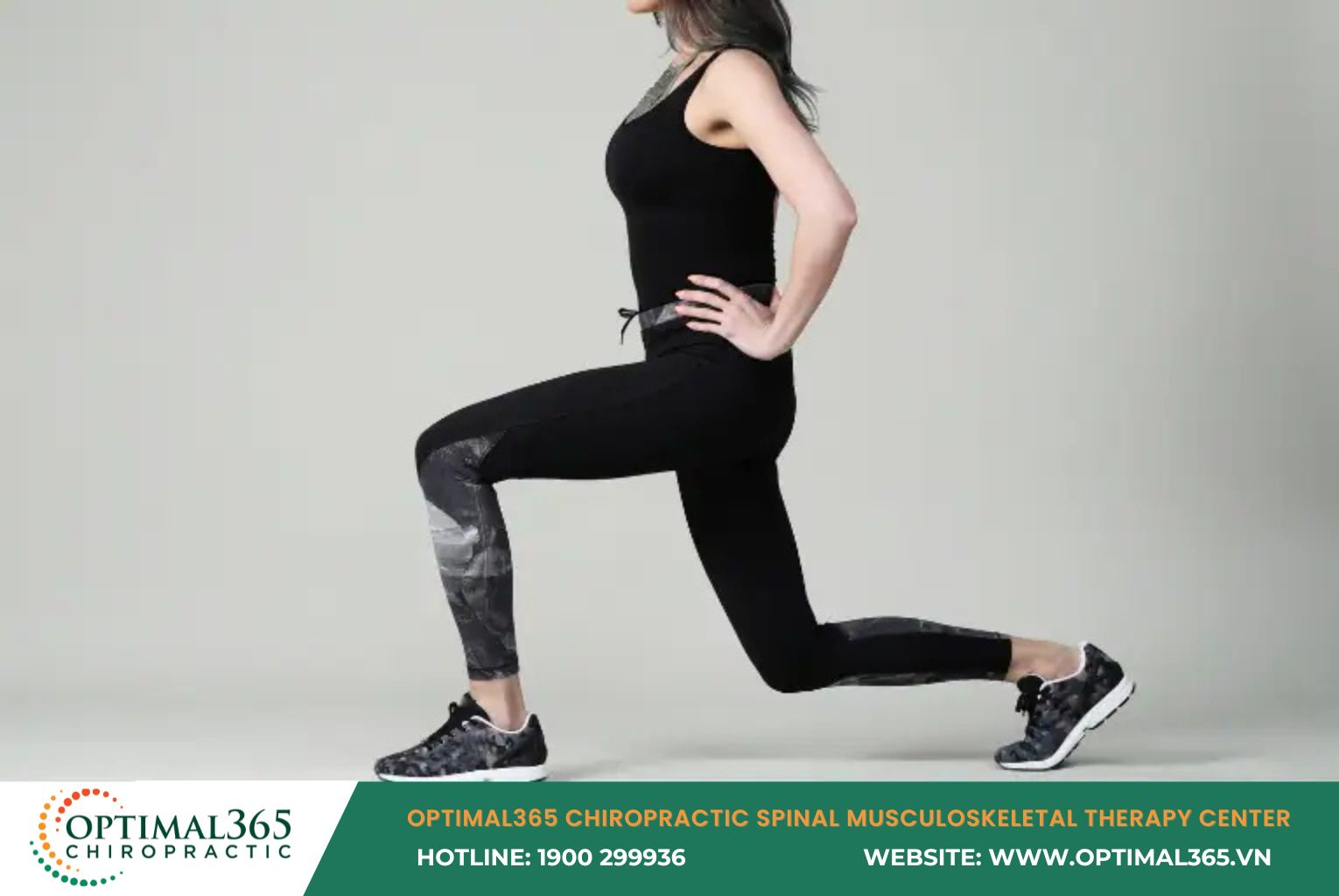
Deep Lunges
Deep lunges are a physical therapy exercise for the knee joint that strengthens thighs, glutes, and improves balance. However, improper technique can overload the knee, increasing ligament and cartilage injury risk.
This exercise is performed as follows:
- Stand straight, feet hip-width, back straight, core tight.
- Step one foot forward, moderate distance so knee does not pass toe.
- Lower until front thigh parallel to floor, back knee near but not touching ground.
- Drive heel to push up to start. Alternate legs.
Notes:
- Keep knee aligned with ankle to avoid excess knee pressure.
- Do not step too long/short, adjust for leg length.
- If knee injury or joint pain, use lower range or consult specialist.
The above are 9 physical therapy exercises for the knee joint shared by Optimal365 Chiropractic. We hope this information helps you select suitable exercises to improve knee function, reduce pain, and enhance mobility. If pain persists or worsens after exercises, consult a specialist for evaluation and appropriate treatment.
At Optimal365 Chiropractic, we apply advanced chiropractic therapy using cutting-edge technology to address root causes of knee pain without medication or surgery. If pain persists after exercises, with swelling/stiffness or increased pain on movement, seek evaluation for accurate diagnosis. At Optimal365 Chiropractic, you will receive musculoskeletal screening and a customized therapy plan – exercises tailored to your knee condition, minimizing overload from improper training.