Have you ever struggled to reach your hand over your head, fasten a bra behind your back, or grab items from high shelves? These seemingly simple signs may indicate limited shoulder range of motion (ROM), a common yet often overlooked issue.
The shoulder joint has the greatest range of motion in the body, enabling complex arm movements. However, this flexible structure makes it prone to injury, leading to restricted motion, pain, stiffness, or loss of flexibility.
So, what is normal shoulder range of motion? How to recognize shoulder issues? Join Optimal365 Chiropractic for a detailed exploration below.
What is Shoulder Range of Motion?
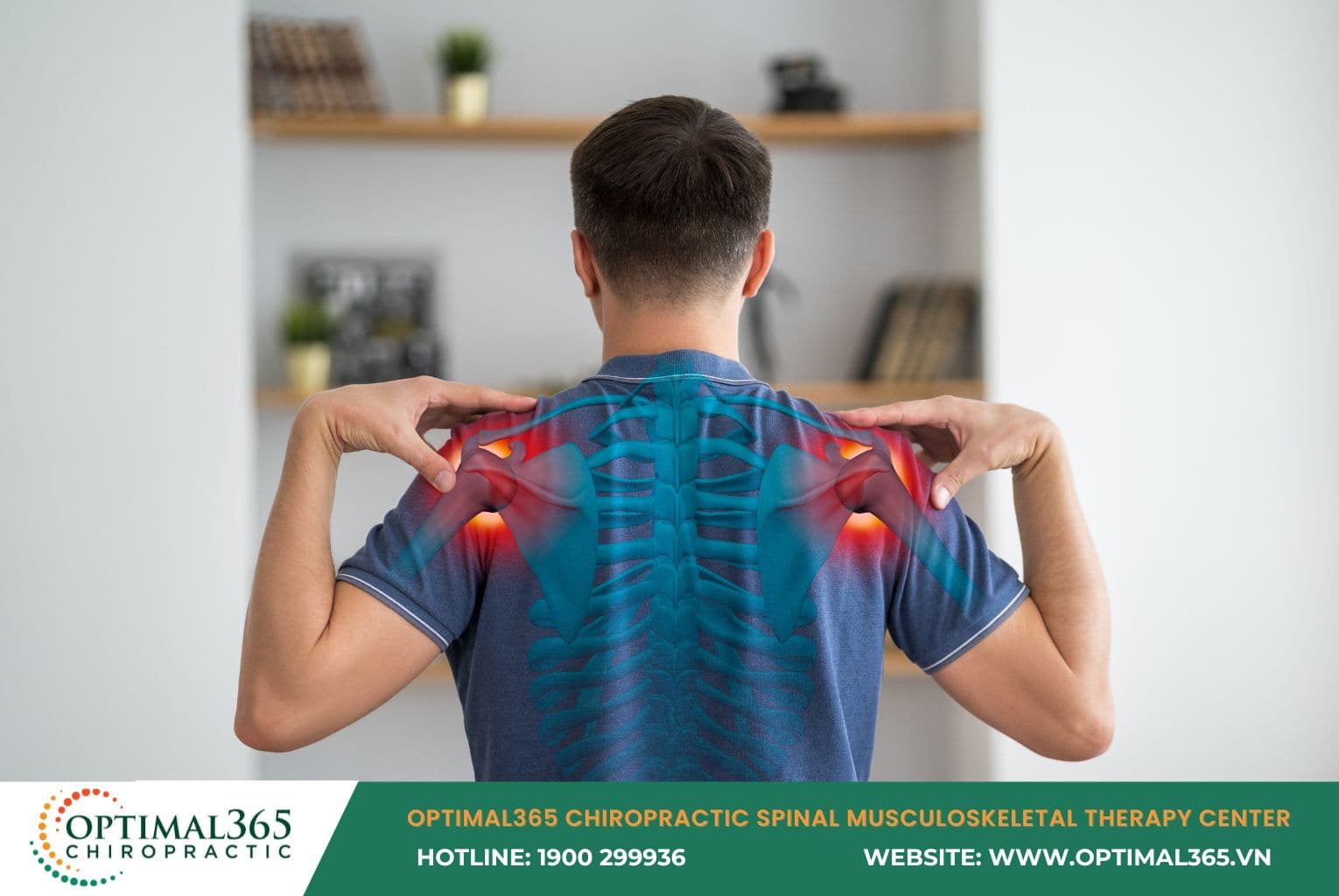
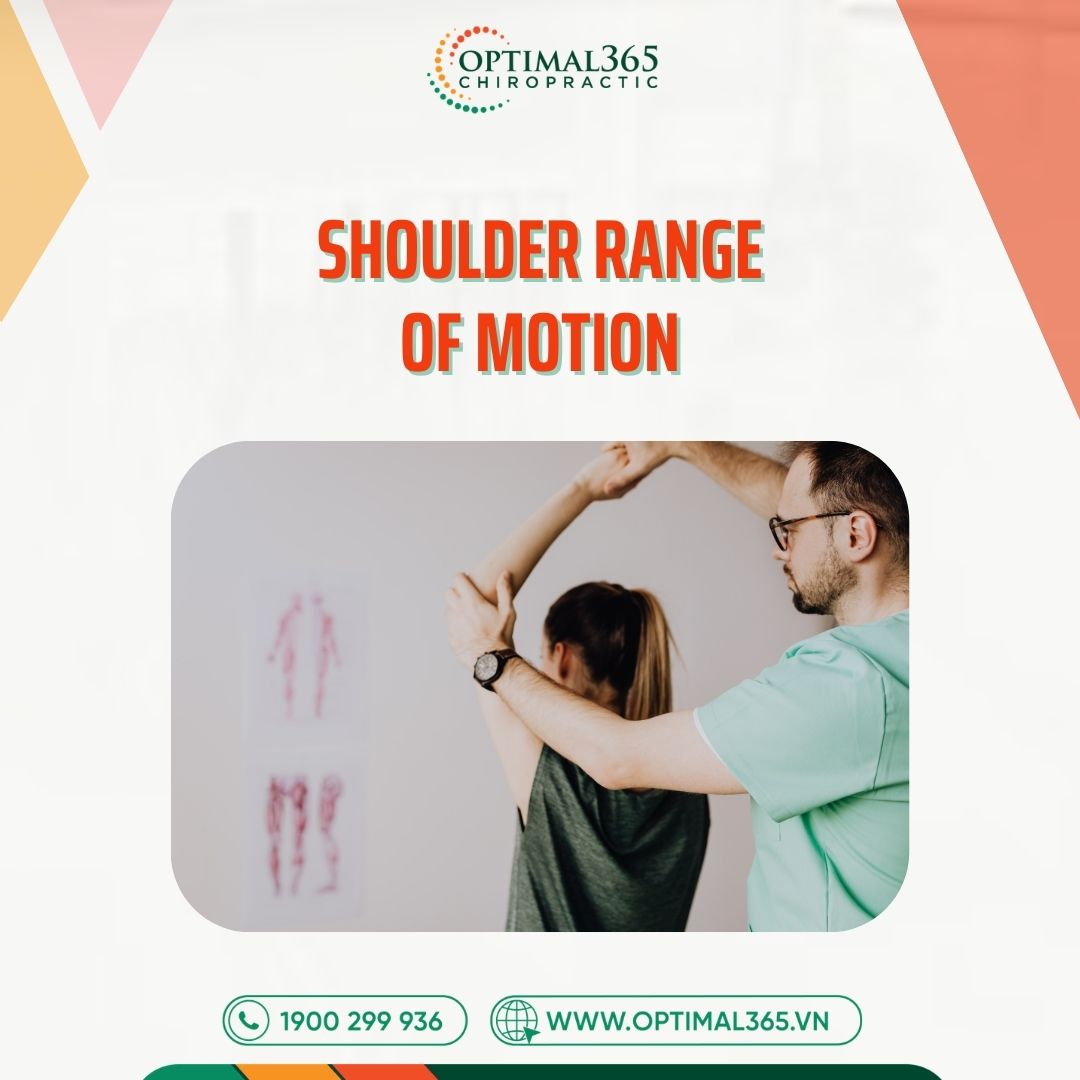
Shoulder range of motion (Range of Motion – ROM) is a clinical metric reflecting the maximum movement a joint can achieve in specific directions. It is essential for assessing motor function, early detection of restrictions, biomechanical abnormalities, or hidden joint injuries.
The shoulder is the body’s most flexible joint, allowing multi-directional arm motion. Anatomically/physiologically, shoulder ROM divides into main groups:
- Flexion – Extension: Raising arm forward and backward along the body’s vertical axis.
- Abduction – Adduction: Spreading arms sideways and returning to the body’s midline in the horizontal plane.
- External – Internal Rotation: Rotating arm outward or inward, typically assessed at 90° elbow flexion.
- Circumduction: Combined sequential movements forming a circle, reflecting overall joint flexibility.
Measuring and tracking these motions supports treatment evaluation (rehabilitation), prevents complications, especially in high-risk groups like the elderly, post-injury, or post-shoulder surgery patients.
Normal Shoulder Range of Motion Values Table
Normal shoulder ROM in healthy adults uses standardized angular measurements via goniometer in controlled clinical settings. These serve as key references for joint function assessment, early restriction diagnosis, and tailored rehab protocols.
Specific normal shoulder range of motion values:
| Motion | Normal Angle (degrees) |
| Shoulder Flexion | 160 – 180° |
| Shoulder Extension | 45 – 60° |
| Shoulder Abduction | 150 – 180° |
| Shoulder Adduction | 30 – 50° |
| External Rotation | 80 – 90° |
| Internal Rotation | 70 – 90° |
Values below these indicate restrictions, common in periarthritis, frozen shoulder, osteoarthritis, or post-trauma sequelae. Early ROM detection aids effective intervention and rehab.
How to Know If You Have Limited Shoulder Range of Motion?
Limited shoulder range of motion is a common clinical sign marked by reduced amplitude in one or more basic directions. It may progress silently or acutely based on cause, injury severity, and onset.
Typical early recognition symptoms:
- Reduced ability to raise arm overhead or abduct to shoulder level—first sign of lost daily flexibility.
- Pain/discomfort reaching behind back, noted in dressing, bra fastening, or grabbing rear objects.
- Crepitus/cracking sounds on rotation, suggesting muscle-tendon-joint irregularities or perijoint friction.
- Morning shoulder stiffness, worse in cold, with temporary post-wake inflexibility—common in chronic periarthritis.
Goniometer measurement provides precise clinical assessment.
Causes of Reduced Shoulder Range of Motion
Reduced shoulder range of motion (ROM) is common, stemming from complex pathologies involving joint capsule, perijoint tendons-muscles, pain, and immobility. Accurate cause identification guides prognosis and treatment. Common mechanisms:
Adhesive capsulitis and capsular contracture (frozen shoulder)
Most common, restricting active/passive motion. Inflammation thickens capsule, causing glenohumeral adhesions and periglenuid ligament shortening. Rotator interval and perijoint soft tissues scar, progressing without early intervention—late stages may need arthroscopic release for ROM restoration.
Acute pain and “pseudofrozen shoulder”
Severe sudden pain disrupting sleep prompts guarding arm against body, restricting motion via pain-avoidance reflex, not structural damage.
Pain-immobility vicious cycle
Uncontrolled chronic pain reduces motion, causing prolonged immobility. This impairs muscle-tendon-capsule perfusion/nutrition, promoting atrophy, fibrosis, stiffness—cycle: pain → immobility → more damage → intensified pain → joint dysfunction.
Perishoulder tendon-muscle injuries
Rotator cuff, long head biceps, deltoid tendons may tear, inflame, or rupture, causing active motion loss (e.g., arm elevation) while passive preserved—”pseudoparalysis.”
Deep tissue ischemia and edema from immobility
Prolonged immobility reduces deep perfusion, slowing metabolism, accumulating interstitial fluid, causing perijoint soft tissue edema—exacerbating with pain/spasm/capsular contraction.
Delayed diagnosis/intervention
Untreated minor pain/trauma progresses to frozen periarthritis, secondary adhesions/scarring, eroding function.
Post-surgical complications
Post-joint surgery patients (including TMJ) risk recurrent adhesions without proper rehab, emphasizing early guided mobilization.
In summary, reduced shoulder ROM results from direct structural damage (inflammation, fibrosis, tears), dysfunction (hypoperfusion, edema, atrophy), or secondary pain/immobility effects.
Ways to Improve Shoulder Range of Motion
Improving shoulder range of motion (ROM) is key in rehabilitating periarthritis, adhesive capsulitis, acute shoulder pain, or muscle-tendon injuries. It combines multimodal, phased approaches to relieve pain, restore function, prevent secondary adhesions.
Pain Control – Prerequisite for Mobility Rehab
Pain reduction enables exercise cooperation. Proven non-pharmacological methods:
- Massage/acupressure: Relaxes muscles, boosts circulation, reduces spasm, restores soft tissue elasticity.
- Electroacupuncture/auricular: Modulates pain via nervous system for rapid, stable relief with mechanical combos.
- Thermotherapy/low-frequency electrostim: Localized to reduce inflammation, enhance metabolism.
Exercise Therapy – Stepwise ROM Restoration
Core of shoulder rehab. Principles:
- Progress passive → assisted active → full active → resisted → end-range stretch.
- Gradual per tolerance: Adjust intensity/duration clinically, avoiding re-injury.
- Physiologic axis training: Natural shoulder motions.
Basic exercises:
- Flexion–Extension: Forward raise (flexion), backward reach (extension).
- Abduction–Adduction: Lateral raise to shoulder height (abduction), return midline (adduction).
- Internal–External Rotation: 90° elbow flex, arm adducted; rotate forearm in/out.
Perform repeatedly daily, gradually increasing amplitude per tolerance—slow, controlled, stop if pain/tingling worsens.
Clinical Models: Tailored per case:
- PNF (Proprioceptive Neuromuscular Facilitation): Diagonal-spiral patterns activate neuromuscular reflexes, improving strength/ROM in weak/stiff shoulders.
- Gross motor milestones: Sequence (supine-roll-crawl-kneel-stand-walk) for postures matching current ability, effective post-immobility/surgery.
Physical Therapy – Comprehensive Support
Non-drug modalities:
- Ultrasound, low-freq stim, deep heat: Boost blood flow, relax spasm, nourish injured tissue.
- Assisted devices: Pulleys, wall ladders, therapy chairs—for home use post-guidance.
Follow Ministry of Health rehab protocols.
Surgical Intervention – For Severe Adhesive Capsulitis
Late/conservative failure: Arthroscopic capsular release. Methods per fibrosis:
- Arthroscopic adhesiolysis.
- Manipulation under anesthesia.
Post-op: Early mobilization prevents re-adhesion, restores ROM, averts atrophy.
When to Seek Exam or Shoulder ROM Measurement?
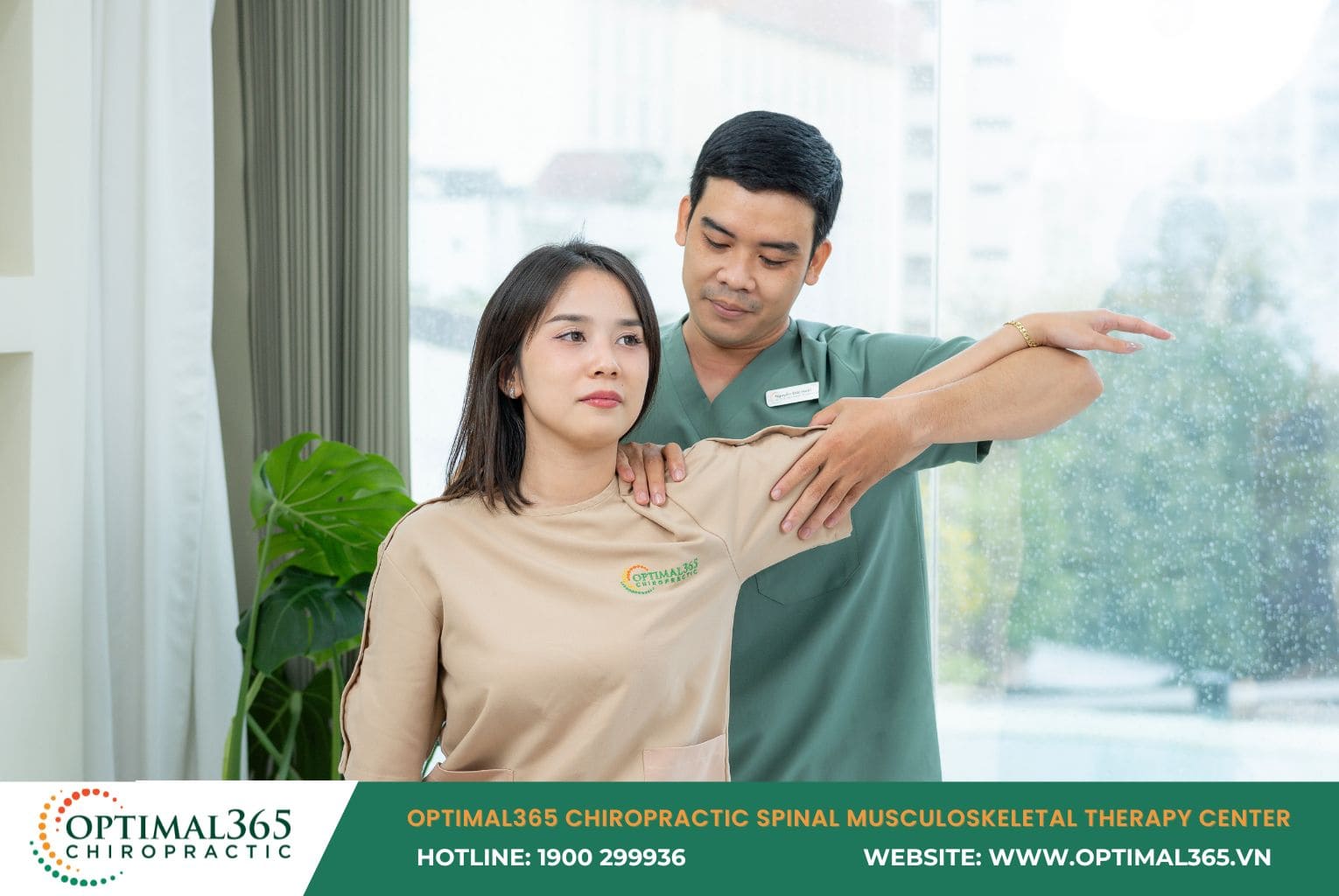
Consult specialists for ROM assessment when:
- Persistent/recurrent shoulder pain with restrictions—common in simple periarthritis/frozen; untreated risks permanent loss.
- Daily activity difficulties: Dressing, hair combing, overhead reach, back rotation—from pain (pseudostiffness) or structural (capsulitis/contracture).
- Active motion loss, passive preserved—”pseudoparalysis” from rotator cuff/biceps tears.
- Both active/passive limits, esp. abduction/external rotation; scapula moves with arm—frozen shoulder hallmark.
- Cause identification: Differentiates periarthritis, frozen, tears for therapy/meds/surgery.
- Treatment monitoring: Periodic for progress, exercise adjustment, early re-adhesion/atrophy detection.
Any prolonged pain or prior ROM decline warrants evaluation. Early accuracy prevents stiffness, atrophy, tears; enables timely optimal rehab.
Conclusion
The shoulder is vital for daily motions—from simple dressing/reaching to heavy lifting, sports, driving. Monitoring/maintaining shoulder range of motion detects early anomalies, preventing chronic issues like frozen shoulder, atrophy, osteoarthritis.
At Optimal365 Chiropractic, we offer in-depth exams/rehab for shoulder pain, partnering athletes (esp. Pickleball) for strength/flexibility gains, injury prevention. Experienced therapists, modern equipment, personalized protocols ensure optimal mobility/performance.
For shoulder issues or ROM checks pre-competition/training, let Optimal365 Chiropractic guide your recovery-rebuild-breakthrough journey.