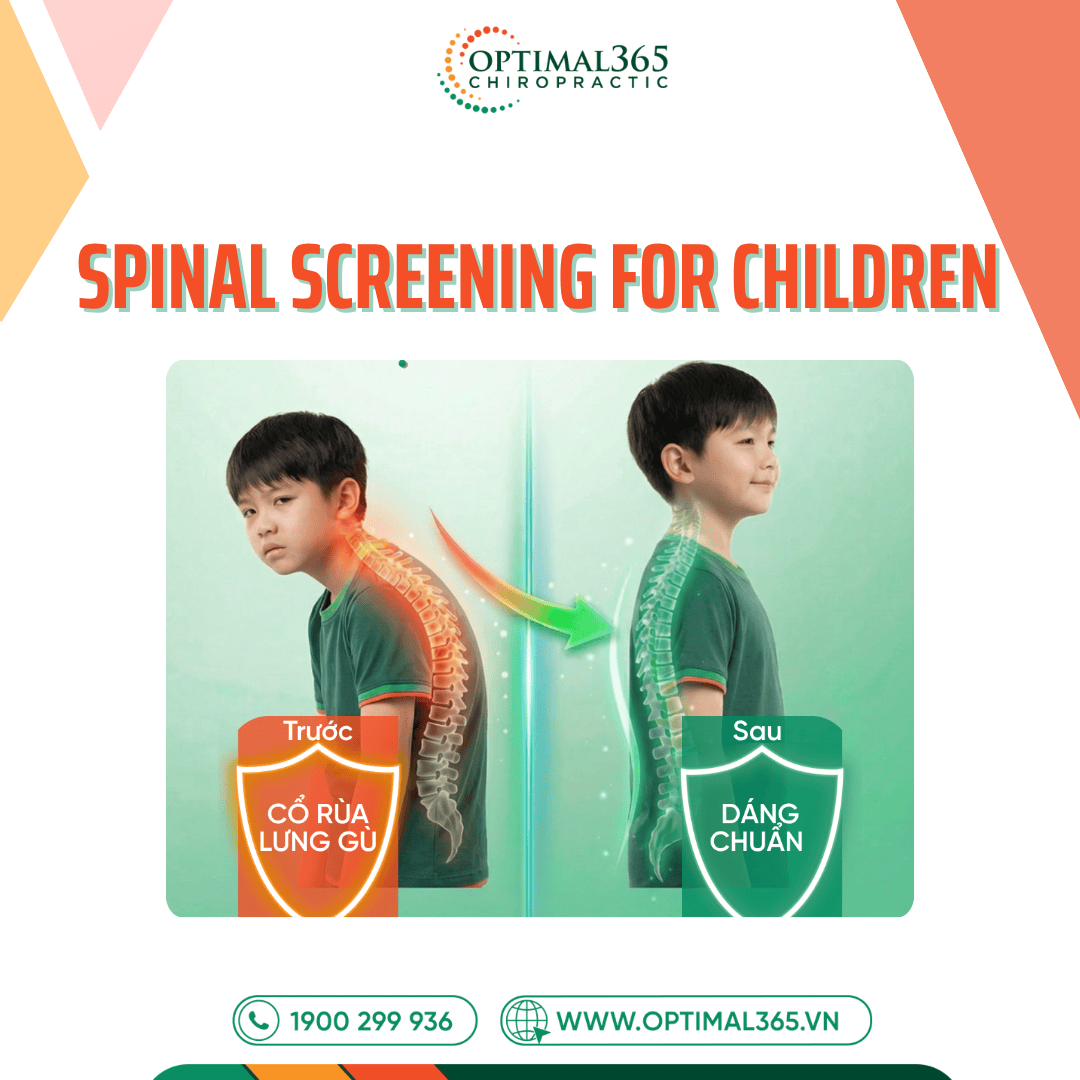
Spinal checkups for children are often overlooked by parents due to the misconception that musculoskeletal issues only affect the elderly. However, medical statistics show that the rate of scoliosis in children is increasing and appearing at younger ages. Late detection not only impacts physical appearance but also directly affects respiratory and cardiovascular functions, as well as the child’s psychological development.
Why Should Parents Proactively Perform Periodic Spinal Checkups for Children?
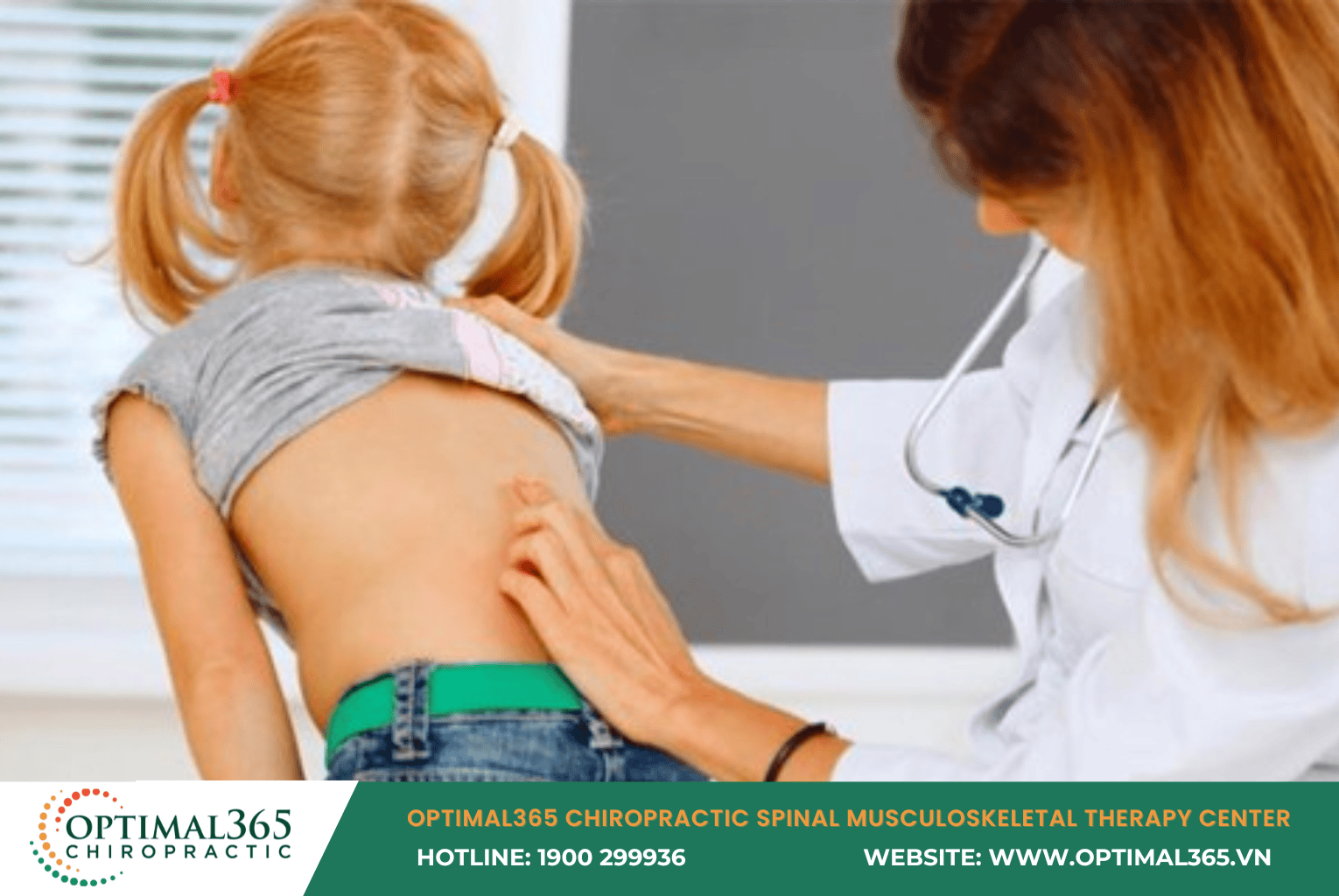
The spine is the framework that supports the entire body and protects the central nervous system. During pre-puberty and puberty, a child’s bones grow very rapidly but have not yet fully hardened. This is both the “golden stage” and the “high-risk stage” for spinal disorders.
According to the Spinal Screening Manual from the Texas Department of State Health Services (DSHS), the primary goal of screening is the early detection of spinal abnormalities such as scoliosis or kyphosis. Intervention while the bones are still growing yields the highest treatment efficiency without the need for invasive measures or complex surgery.
Warning Signs That Require an Immediate Spinal Checkup
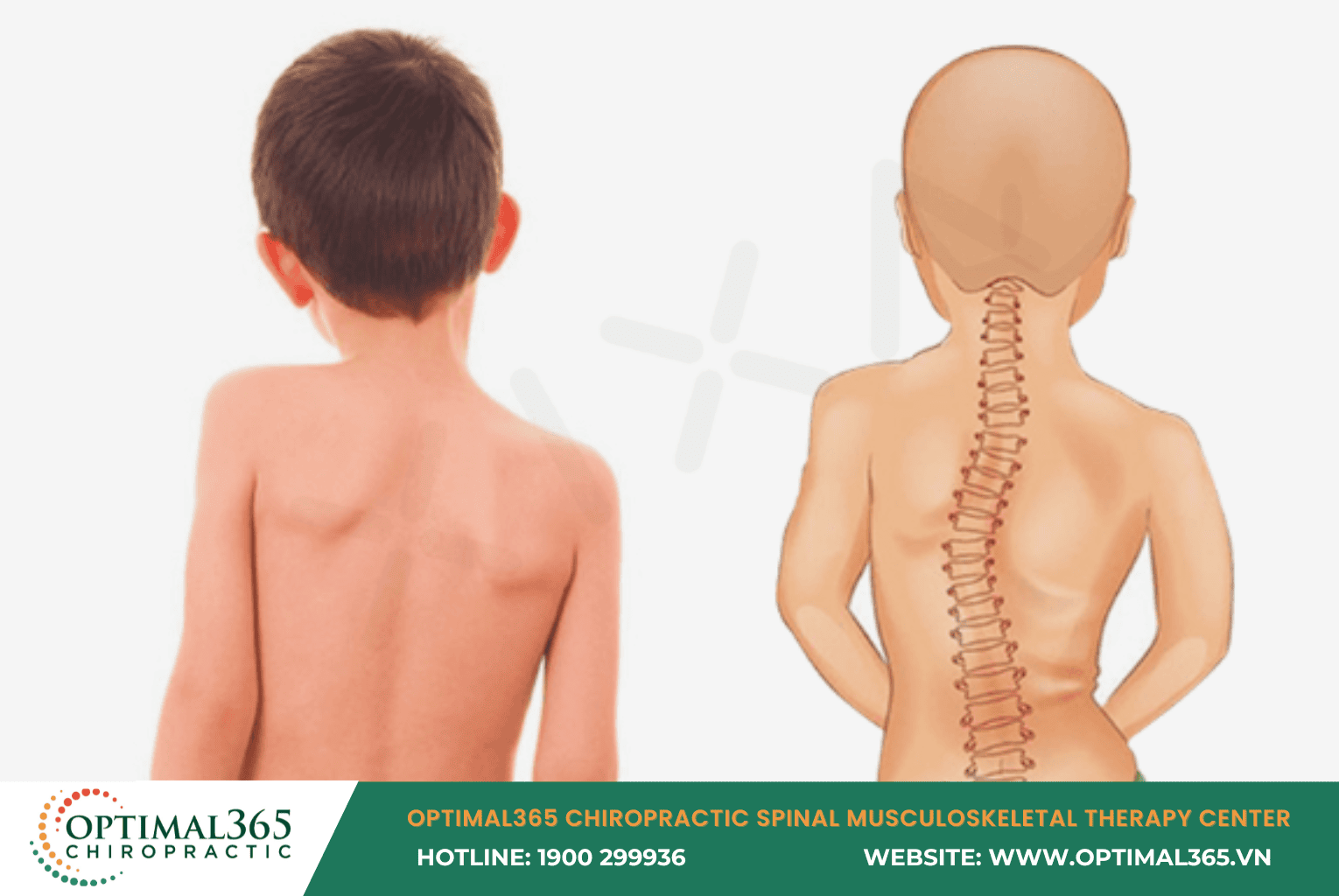
Parents can observe abnormal signs at home to promptly take their children for a specialist examination. Typical symptoms include:
- Uneven shoulders: One shoulder is higher or lower than the other.
- Protruding shoulder blades: One shoulder blade sticks out further or is positioned higher than the other.
- Uneven waistline: When the child stands straight, the gap between the arms and the waist is visibly different on each side.
- Tilted hips: One hip is higher or appears fuller than the other.
- Misaligned head: The head is not centered over the shoulders or tends to tilt to one side.
If a child experiences persistent back pain, fatigue while sitting in class, or difficulty in sports activities, these are “red flags” indicating that the spine is under excessive pressure or has become deformed.
Standard Medical Procedure for Home Spinal Checkups
Based on the Alabama Public School Spinal Screening Manual (Madison City Schools), you can perform the Adam’s Forward Bend Test—a simple yet highly effective method for scoliosis screening.
Steps to perform the Adam’s Test:
- Preparation: Have the child stand straight with feet together and arms hanging loosely at their sides. The child should wear fitted clothing or have their back exposed for clear observation.
- Execution: Instruct the child to bend forward slowly until the back is parallel to the ground. Palms should be pressed together, hanging down toward the floor, with knees kept straight.
- Observation: The parent stands behind or in front of the child to observe the symmetry of the back.
- Abnormal sign: One side of the back or ribs is higher than the other (forming a hump).
- Spinal alignment: Observe along the spine for any S-shaped or C-shaped curves.
According to research published by the National Center for Biotechnology Information (NCBI), periodic screening for children aged 10–14 for girls and 12–15 for boys (the peak growth phase) plays a decisive role in reducing spinal surgery rates by up to 50%.
Consequences of Neglecting Spinal Checkups
If scoliosis is not detected and treated timely, it leads to severe consequences:
- Impact on Internal Organs: Severe spinal curvature deforms the chest cavity, compressing the heart and lungs, leading to reduced lung capacity and shortness of breath.
- Early Degeneration: Misalignment causes uneven weight distribution, leading to chronic back pain and disc degeneration even at a young age.
- Psychological Impact: Children may become self-conscious about their appearance (uneven shoulders, hunched back), leading to social withdrawal and avoidance of group activities.
Non-Drug Solutions for Treating Spinal Curvature
Modern medicine prioritizes conservative methods that adjust the spine without causing pain to the child.
- Chiropractic Care: Doctors use manual adjustments to realign misaligned vertebrae to their physiological positions, releasing nervous system pressure and activating the body’s self-healing mechanism.
- Physical Therapy and Rehabilitation: Specialized exercises help rebalance the back muscles and strengthen the core to stabilize the spinal axis.
- Corrective Bracing (if necessary): In cases of significant curvature, doctors may prescribe a specialized brace to prevent further progression.
For more details on reputable specialized clinics, parents can refer to: where to get a scoliosis checkup for children to choose the most suitable facility for their child.
Why Choose Optimal365 Chiropractic for Your Child’s Spinal Checkup?
At Optimal365 Chiropractic, we understand that children’s spines require delicate and precise care. Our screening process is built on international standards:
- Experienced Expert Team: Chiropractic specialists directly examine and assess gait, bone structure, and spinal flexibility.
- Modern Diagnostic Imaging: Utilizing precise methods to evaluate spinal deviations and minor misalignments.
- Personalized Protocols: Each child receives a unique treatment plan combining Chiropractic, Physical Therapy, and medical-grade home exercises.
- Drug-Free and Surgery-Free: Ensuring absolute safety for the child’s natural development, aiming for “Sustainable wellness from within.”
Expert Tips for Daily Spinal Protection
In addition to periodic checkups, parents should establish healthy lifestyle habits for their children:
- Studying Posture: Ensure desks and chairs match the child’s height—back straight, feet flat on the floor, and eyes 25–30cm from the book.
- Backpack Load: The weight of the backpack should not exceed 10% of the child’s body weight. Use backpacks with two padded shoulder straps.
- Physical Activity: Encourage sports that benefit the spine, such as swimming, pull-ups, or children’s yoga.
- Nutrition: Supplement adequate Calcium, Vitamin D3, and K2 for strong bone development.
Conclusion
A spinal checkup for your child is not just a medical procedure; it is an investment in their future and quality of life. Do not wait until your child complains of pain to start worrying. Be proactive today to protect the “priceless gift” that is your child’s spinal health.