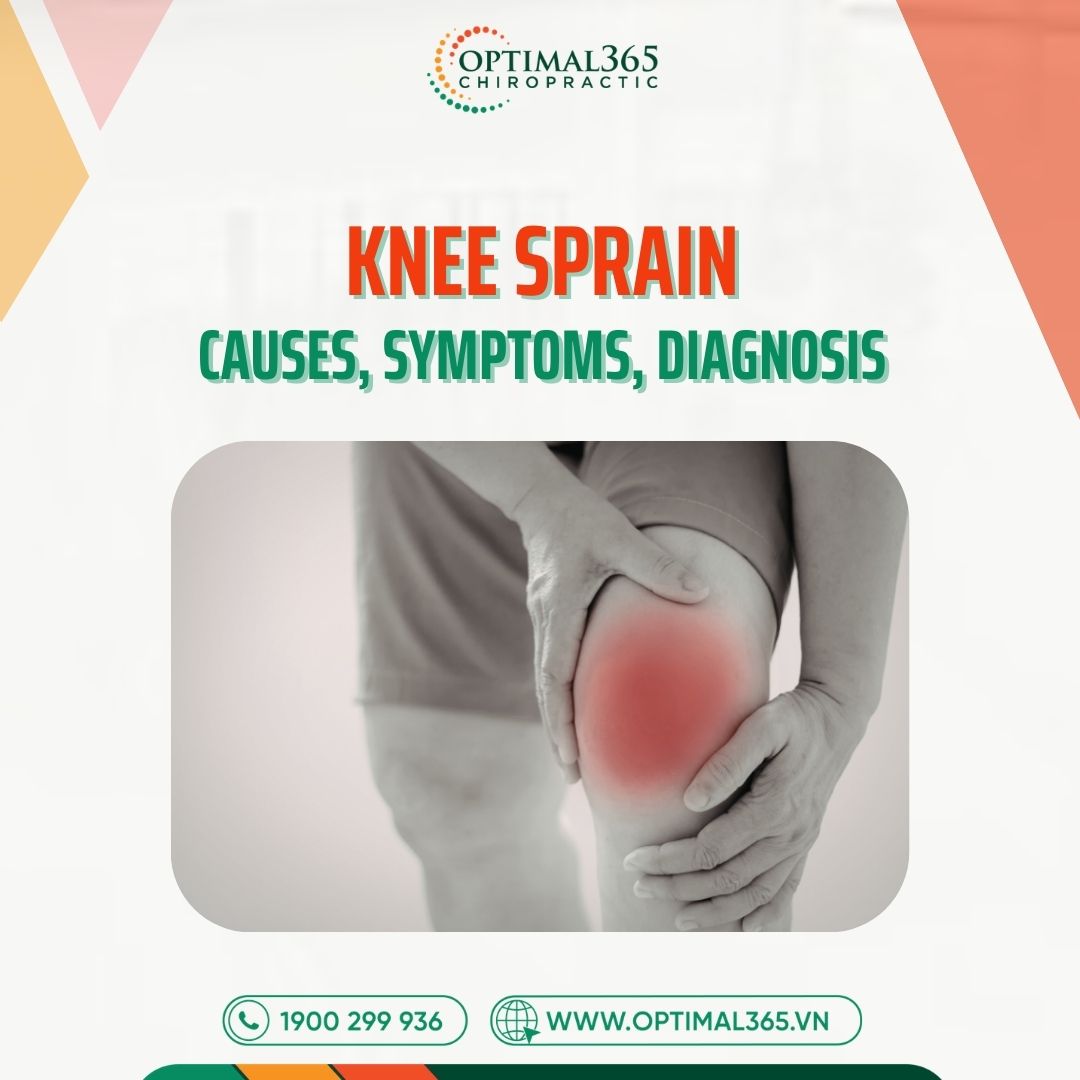
Knee sprain is a fairly common injury, especially in people who frequently exercise or play sports. Timely handling and knowing when to seek medical attention will help reduce the risk of complications and speed up recovery.
What is Knee Sprain?
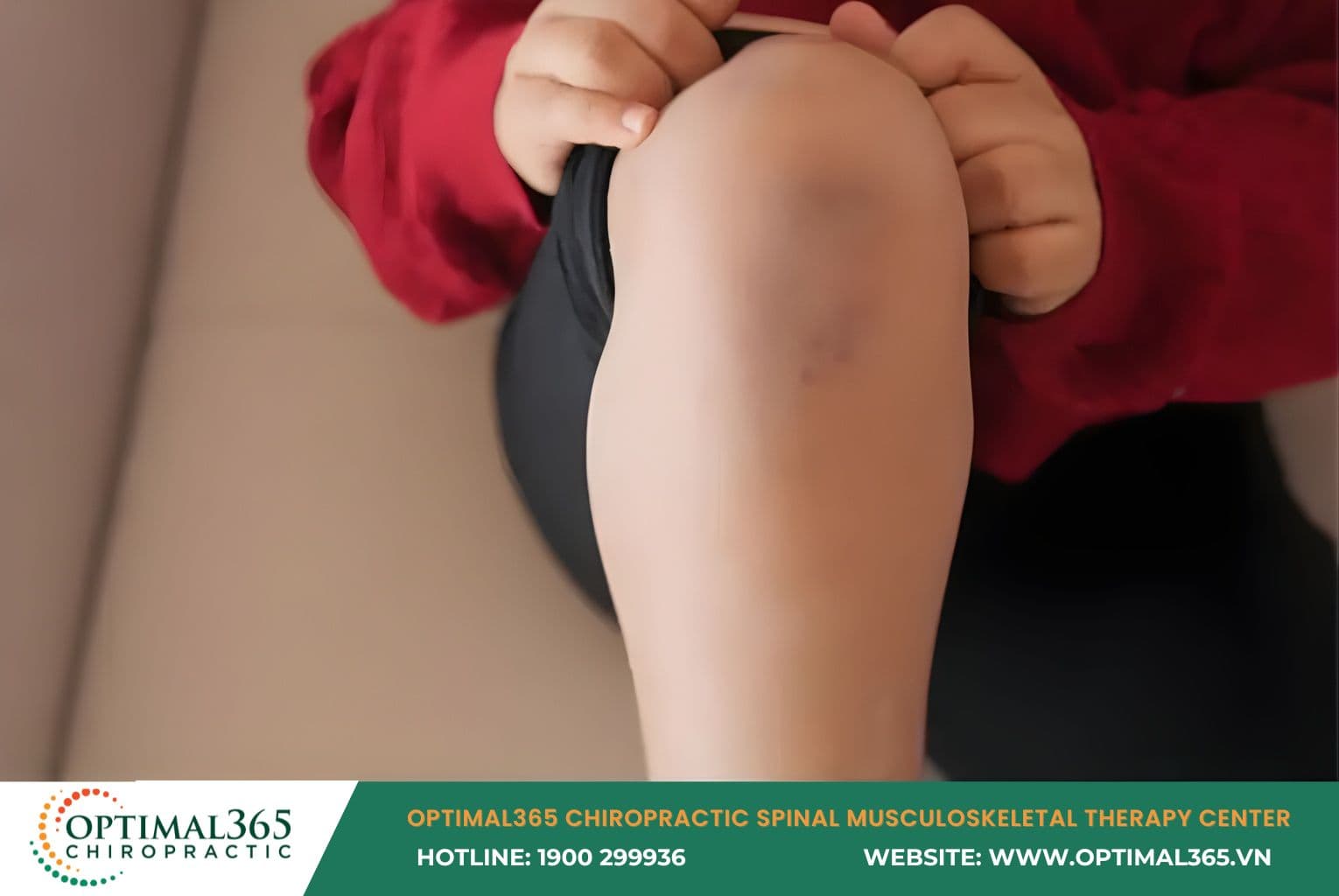
“Knee sprain” is commonly used to refer to an injury at the knee joint, but medically, it is a condition of ligament damage (ligaments being stretched or torn). Ligaments are connective tissues that maintain knee joint stability.
Knee sprain is classified into three grades:
- Ligament strain (Grade I): Ligaments are stretched but not torn.
- Partial ligament tear (Grade II): Ligaments are partially separated.
- Complete tear (Grade III): Ligaments are completely ruptured, causing knee joint instability.
Common Causes of Knee Sprain
Knee sprain often occurs due to the following causes:
- Sports: Sports requiring high mobility like soccer, basketball, tennis, skiing, or water sports easily lead to ligament injuries. Sudden direction changes, improper landing, or collisions with opponents are common causes.
- Traffic accidents or daily activities: Falling while riding a vehicle, slipping on slick surfaces, tripping while walking, or direct strong impacts to the knee can damage ligaments.
- Heavy labor: People doing jobs involving heavy lifting, frequent stair climbing, or repeated bending and squatting put pressure on the knee joint, overloading the ligaments.
- Overweight individuals: Excess weight increases pressure on the knee joint, easily causing ligaments to stretch or tear.
- Elderly people: Ligaments weaken over time, making the knee joint less stable and prone to injury from trips or falls.
Signs to Recognize Knee Ligament Injury
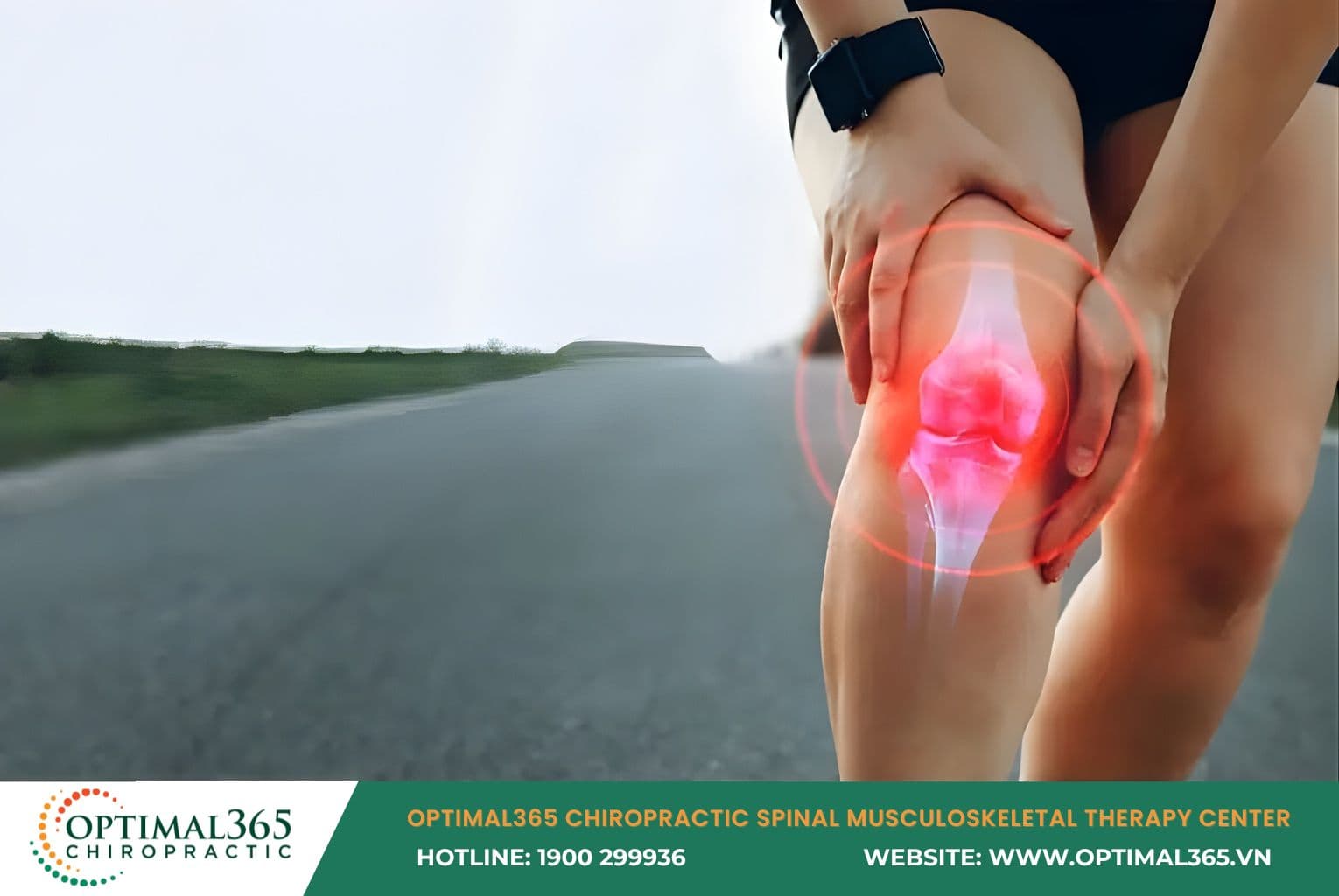
Knee ligament injury can cause clear symptoms immediately after impact or trauma. Here are the common signs to help you recognize it:
- Severe or dull pain: Pain in the knee area may appear immediately or increase gradually over time. Pain level depends on the degree of damage, especially pronounced when moving, climbing stairs, or bearing weight.
- Rapid swelling: After injury, the knee may swell within minutes to hours due to fluid accumulation and inflammatory response. In some cases, swelling can last many days if not treated promptly.
- Difficulty in movement: The injured person may have trouble fully extending or flexing the knee. When attempting movement, the knee may feel tight or have sharp pain, limiting mobility.
- Sensation of loose or unstable knee joint: If ligaments are partially or completely torn, you may feel the knee slipping out of position or unable to bear weight when standing. This is especially evident when trying to walk or pivot suddenly.
- Bruising and subcutaneous hematoma: After injury, blood may leak into surrounding tissues, causing bruising and skin discoloration around the knee. This sign usually appears after a few hours to a day.
- ‘Pop’ or ‘snap’ sound at injury: In some cases, the patient may hear a small sound at the moment the ligament tears. This is a serious warning sign indicating high-degree ligament damage.
- Warmth, redness, and increased temperature at the knee: When injury occurs, inflammation makes the surrounding area warmer, sometimes with redness and sensitivity to touch.
You might also be interested in: Knee Muscle Strain – Symptoms and Treatment for Athletes
Home Treatment for Knee Sprain
Immediately after injury, follow the R.I.C.E. principle to effectively reduce pain and swelling:
- Rest: Avoid putting weight on the knee joint, limit movement to prevent worsening the injury.
- Ice: Apply ice for 15-20 minutes per session, 3-4 times a day. Do not apply ice directly to the skin; wrap it in a thin cloth.
- Compression: Use elastic bandage to wrap around the knee for support, but not too tightly to avoid affecting blood circulation.
- Elevation: When lying down, elevate the leg above heart level to help reduce swelling.
Specifically, in cases of mild sprain (minimal swelling, no severe bruising, still able to move): - Rest for the first 24-48 hours, avoid strenuous activities.
- Continuous cold compress for the first 2 days, then gentle warm compress to promote blood circulation.
- Gentle massage with medicated oil or hot oil to reduce muscle stiffness.
- Use topical pain relief gel or cream if necessary.
- After 48 hours, apply light exercises like slow knee flexion and extension to prevent joint stiffness.
When to See a Doctor for Knee Sprain?
In many cases, knee sprain can recover on its own with proper care. However, seek medical attention immediately if you experience these severe signs:
- Persistent or worsening pain: If severe pain occurs right after injury or does not improve after a few days, it may indicate ligament tear or more serious damage.
- Significant swelling with widespread bruising: Mild swelling is a natural body response, but if the knee swells abnormally large, spreads to surrounding areas, and bruising does not subside after 48 hours, you may have ligament or joint damage.
- Loose, unstable knee joint sensation: If the knee feels unsteady when walking, loose joint, or subluxation during movement, it may indicate serious ligament damage (anterior, posterior, or collateral ligaments).
- Unable to fully extend or flex the knee: If normal movements like knee flexion/extension or walking are impossible due to pain and stiffness, it may indicate ligament tear or joint cartilage damage.
- ‘Pop’ sound or subluxation sensation at injury: If you heard a strange sound or felt the knee dislocate during injury, the ligament is likely partially or completely torn.
- No improvement after 5-7 days of home treatment: If symptoms persist despite applying ice, compression, elevation, and rest, visit a medical facility for examination.
Expert advice:
If you suspect ligament tear, joint dislocation, or other serious injury, do not be negligent. Consult an orthopedic specialist or chiropractor for accurate diagnosis and appropriate treatment plan. Early intervention prevents long-term complications and ensures optimal recovery.
Knee Sprain Treatment at Optimal365 Chiropractic
At Optimal365 Chiropractic, we apply safe, non-medication therapy methods, helping patients recover knee joints naturally and effectively. Our therapy not only focuses on pain reduction but also comprehensive knee joint function restoration, preventing complications and recurrence. Specifically:
- Chiropractors use gentle adjustment techniques to realign the knee joint to its physiological axis, reducing pressure on ligaments and improving mobility.
- Spinal adjustments improve nervous system-knee joint alignment, supporting natural body recovery without medication or surgery.
- Personalized exercises to strengthen surrounding knee muscles, stabilizing the joint and aiding recovery.
- Physical therapy to increase flexibility, improve range of motion, and balance knee joint load during movement.
- Combined therapeutic massage, low-level laser, shockwave to stimulate blood circulation, reduce inflammation, and accelerate damaged tissue recovery.
- Patients are guided on proper walking, sitting, and exercising to avoid knee joint pressure.
- Home maintenance exercises to prolong therapy effects and prevent reinjury.
You might also be interested in: What is Chiropractic? What You Need to Know About This Method?
You can learn more about the treatment protocol at Optimal365 Chiropractic:
https://youtu.be/Z9BJYkGfkrQ?si=HOrrl5BEk4CqRiu9
Why Choose Optimal365 Chiropractic for Knee Sprain Treatment?
- Non-invasive method, no medication, no surgery.
- Experts trained in Chiropractic with over 20 years of experience in the US.
- Personalized treatment protocols suitable for each patient’s condition.
- Long-term effectiveness, focusing on root causes rather than just symptoms.
Conclusion
Knee sprain is a common injury but with proper handling, you can recover quickly and avoid complications. Remember to follow the R.I.C.E. rule immediately after injury and see a doctor if severe signs appear. At Optimal365 Chiropractic, we provide natural therapy methods to help you regain knee joint health safely and sustainably.