Arm muscle strain impacts the work performance of anyone. When experiencing this condition, we often feel soreness and want to “relieve” this discomfort. Join Optimal365 Chiropractic to explore the root causes, scientifically proven solutions, and effective prevention methods through the article below!
What is Arm Muscle Strain? Why Might You Experience This Condition?
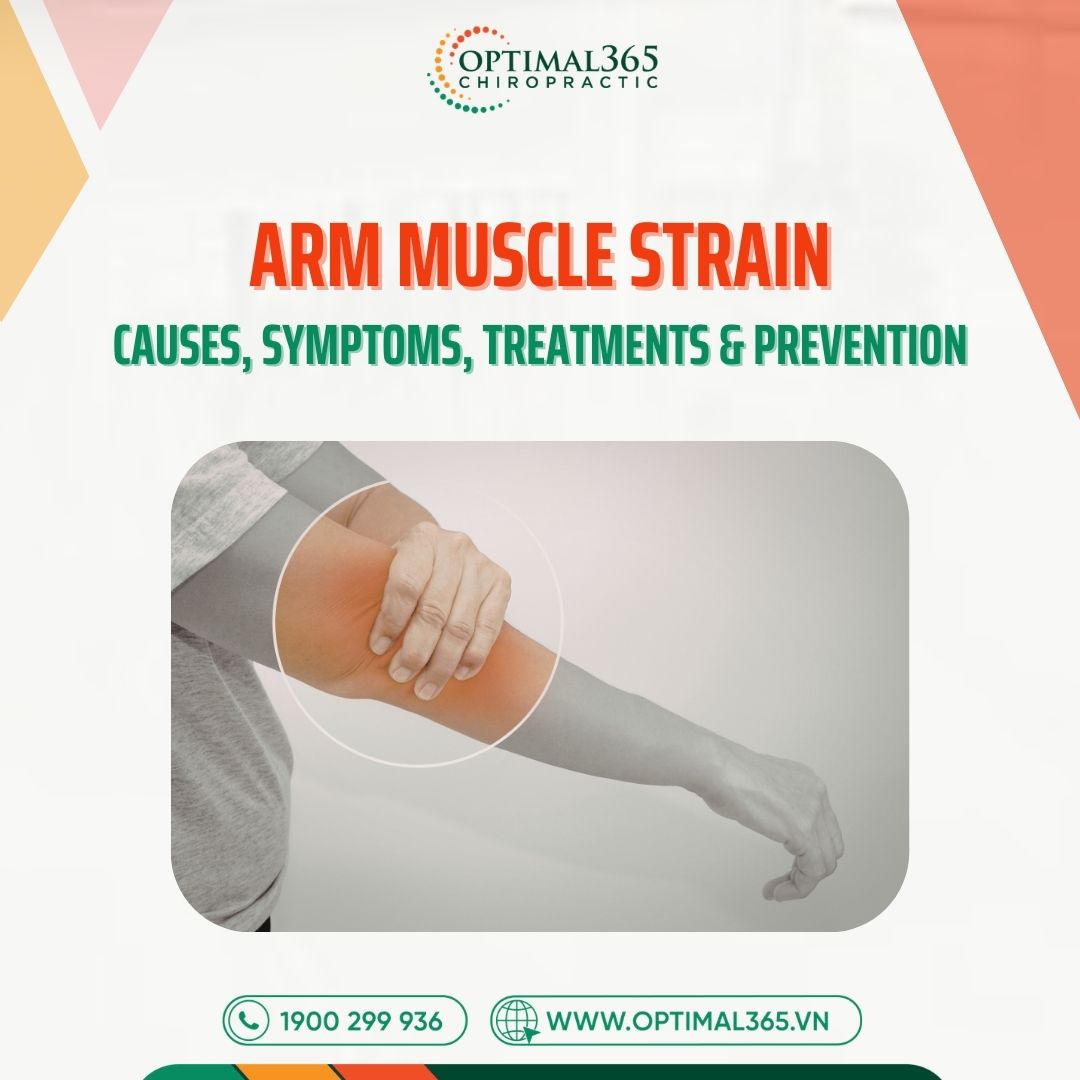
Arm muscle strain, also known as arm muscle pull, is a condition where muscle fibers are overstretched or torn due to excessive pressure or stress. This leads to pain, swelling, and limited mobility of the upper limb. This condition often occurs when muscles endure loads beyond their tolerance or due to performing repetitive motions over a prolonged period.

At-Risk Groups:
- Office Workers: Prolonged sitting, especially continuous keyboard and mouse use, can lead to muscle strain due to poor posture and lack of movement. Continuous stress on the small muscles of the hand and forearm can cause muscle fatigue and strain.
- Athletes: Sports requiring extensive hand use such as tennis, badminton, basketball, and weightlifting place significant pressure on arm muscles. Repetitive motions or improper techniques can lead to muscle strain due to excessive stretching or insufficient rest between sessions.
- Gym-Goers: High-intensity training or heavy weights without proper technique can cause muscle strain. Inadequate warm-up before exercise and lack of post-workout stretching also contribute to increased injury risk.
- Manual Laborers: Those in jobs requiring frequent hand force, such as workers, carpenters, or mechanics, are at high risk of muscle strain due to repetitive activities and continuous pressure on hand muscles. Insufficient rest and lack of protective measures heighten this risk.
How Does Arm Muscle Strain Affect Work and Daily Activities?
Arm muscle strain, also known as arm muscle pull, can negatively impact many aspects of daily life, including work, routines, and sports activities.
Pain and Muscle Stiffness
When muscle fibers are overstretched or torn, patients often experience pain and stiffness in the affected area. This not only causes discomfort but also reduces hand mobility, directly affecting work performance and daily activities.
Limited Mobility
Arm muscle strain can reduce range of motion, making simple actions like gripping, lifting objects, or fine manipulations difficult. This particularly affects those in jobs requiring hand dexterity, such as office workers, craftsmen, or artists.
Impact on Sports Activities

For sports participants, arm muscle strain can decrease performance and increase the risk of more severe injuries if not treated promptly. Continuing activity before full recovery can lead to more serious damage, such as complete muscle tears or tendon injuries.
Thus, arm muscle strain not only causes pain but also significantly affects quality of life, work, and physical activities. Early recognition and timely treatment are crucial to prevent serious complications.
Medical Causes of Arm Muscle Strain
Arm muscle strain, also known as arm muscle pull, occurs when muscle fibers are overstretched or torn due to excessive pressure or stress. Below are common medical causes leading to this condition:
Muscle Spasm from Repetition
Performing repetitive motions over a long time can stress muscles, leading to spasms and strain. This is common in those doing repetitive activities like tennis, baseball, or poor-posture desk work.
Inadequate Warm-Up or Improper Stretching Before Exercise
Failing to warm up properly before intense physical activity can lead to muscle strain. Warm-up increases blood flow to muscles, improves flexibility, and reduces injury risk.
Muscle Imbalance Between Opposing Groups (Extensors – Flexors)
Imbalance between opposing muscle groups, such as extensors and flexors, can cause abnormal strain. When one group is stronger or more flexible than its counterpart, it creates uneven pressure, increasing injury and strain risk.
Dehydration and Deficiencies in Minerals like Potassium, Magnesium, Calcium
Dehydration and deficiencies in key minerals like potassium, magnesium, and calcium can reduce muscle elasticity, leading to cramps and strain. These electrolytes are vital for normal muscle function.
Microtrauma in Muscles from High-Intensity Training
High-intensity training can cause microtears in muscle fibers, leading to inflammation and pain. While natural in muscle-building, poor management can result in strain and more severe injuries.
What to Do for Arm Muscle Strain? Scientifically Proven Solutions for Quick Recovery
Arm muscle strain, also known as arm muscle pull, occurs when muscle fibers are overstretched or torn due to mechanical pressure. Effective treatment requires a comprehensive approach, including initial and recovery phases.
Initial Phase
Rest
Limit movement of the injured muscle area to reduce mechanical stress on overstretched fibers. Continuing painful motions can worsen damage and prolong recovery. Controlled rest is key for effective tissue regeneration.
Cryotherapy (Heat-Cold Therapy)
Apply ice locally for 15–20 minutes per session, repeated every 2–3 hours for the first 48 hours post-injury. This vasoconstricts blood vessels, reduces swelling, and controls acute inflammation. Avoid direct ice on skin to prevent cold-induced soft tissue damage.
Compression
Use elastic bandages for moderate pressure on the injured area, reducing edema by limiting tissue fluid leakage. Ensure not too tight to avoid impeding blood flow and metabolism at the site.
Elevation
Keep the injured arm elevated above heart level when possible, optimizing venous return, reducing inflammatory fluid accumulation and edema. This supports inflammation control, especially in initial hours post-injury.
Recovery Phase
Arm muscle strain (arm muscle pull) is a soft tissue injury from excessive stretching or tearing due to mechanical force. Recovery is vital for restoring mobility, reducing recurrence, and preventing chronic damage.
Physical Therapy for Muscle Recovery
Physical therapy is a conservative treatment reducing pain, improving flexibility, and aiding muscle function recovery. Common methods include:
- Stretching exercises: Passive and active stretches increase range of motion, reduce spasms, and improve circulation at the injury site.
- Strengthening exercises: Controlled resistance builds muscle load capacity, preventing reinjury.
- Heat therapy: Hot applications enhance circulation and reduce spasms; cold therapy reduces inflammation and acute pain.
Physical therapy should be guided by experts for safety and clinical efficacy.
Watch more in the video below:
https://youtube.com/shorts/isltQj57fvU
Chiropractic Care
Chiropractic method adjusts the musculoskeletal system, especially spine and arm joints, to optimize mobility and force distribution. Chiropractic interventions offer benefits like:
- Improving muscle balance, reducing uneven pressure on upper limb joints.
- Supporting natural muscle relaxation and pain relief without medications.
- Enhancing range of motion for better adaptation to daily functional activities.
Medical Device Support for Recovery
Supportive devices can reduce mechanical stress on the injury and limit reinjury risk:
- Kinesiology Tape: Supports muscles, reduces strain at the site, and improves neuromuscular feedback.
- Braces: For wrist or elbow-related strains, braces provide temporary fixation, offloading mechanical stress.
Active Stretching
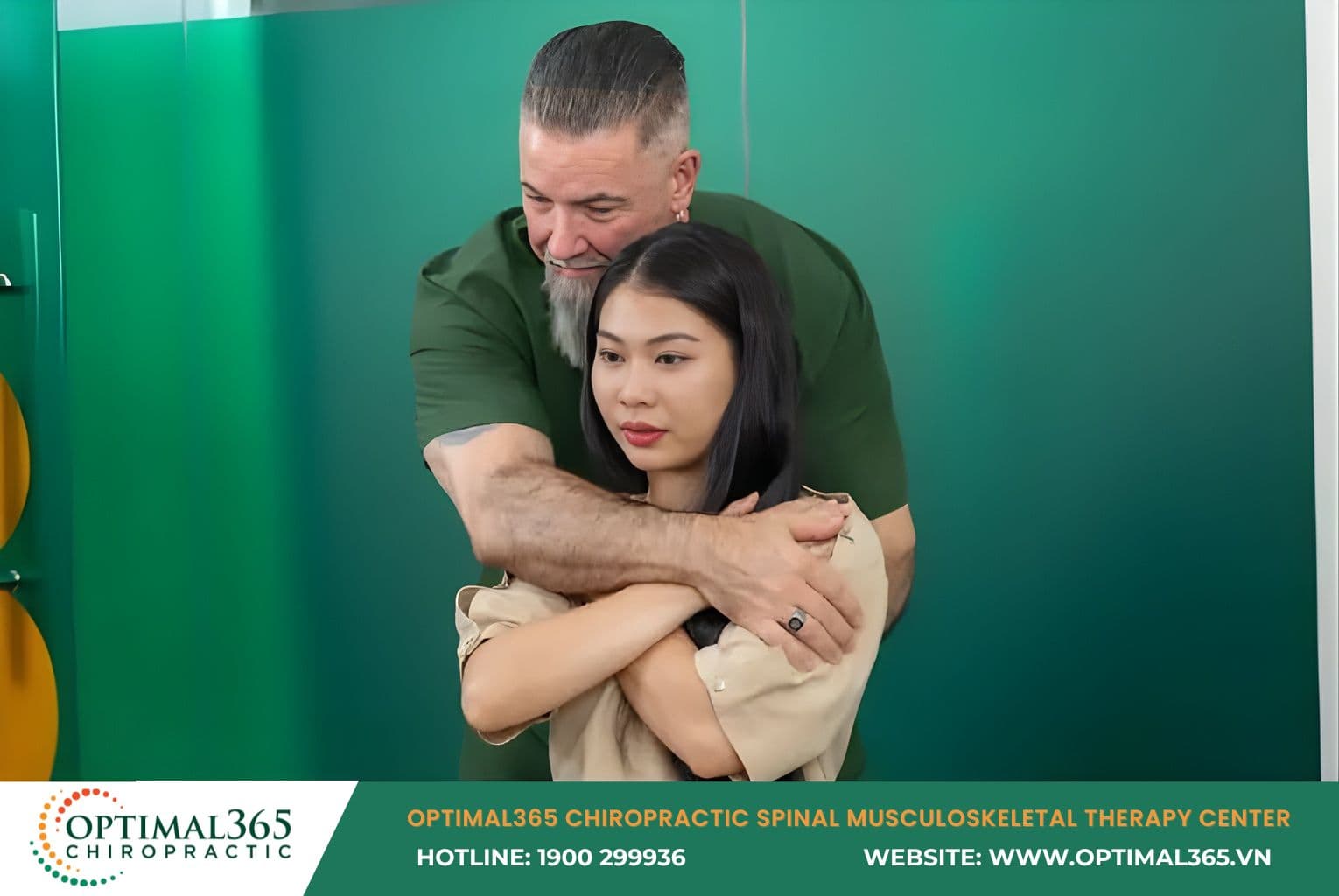
Beyond treatments above, active stretching maintains range of motion, reduces spasm risk, and prevents reinjury. Perform under medical guidance for safety and patient-specific suitability.
Effective Prevention Methods for Arm Muscle Strain
Arm muscle strain is common across groups from office workers to athletes and manual laborers. Prevention requires attention to posture, work/exercise habits, nutrition, and rest. Below are specific measures for each group:
For Office Workers
Adjust Work Posture
- Use ergonomic equipment: Ensure chair and desk height keep wrists and forearms neutral. Ergonomic keyboards and mice reduce arm muscle pressure.
- Proper sitting: Keep back straight, shoulders relaxed, wrists aligned with forearms during typing or mousing.
Take Breaks and Do Stretching Exercises
- Break times: Rest 5-10 minutes every 45 minutes to relieve arm muscle stress.
- Stretching: Simple stretches like chest, arm, and shoulder extensions boost blood flow and reduce muscle tension.
Increase Off-Work Activity
Engage in light exercises like walking, yoga, or swimming to maintain muscle flexibility and strength, reducing sedentary strain risk.
For Athletes
Proper Warm-Up Before Training
Dedicate 10-15 minutes to full-body warm-up, focusing on raising body temperature and blood flow to targeted muscles.
Suitable Weights and Intensity
Start low and progress gradually for adaptation, avoiding overload leading to strain.
Balanced Nutrition
Ensure protein-rich diet for muscle recovery and growth. Hydrate before, during, and after training for hydration and function.
For Manual Laborers
Use Supportive Tools
Employ vibration-resistant gloves or ergonomic-handle tools to reduce arm muscle pressure.
Intersperse Rest Periods
Rest 5-10 minutes hourly for arm muscle relaxation and recovery, reducing continuous work strain.
Train Arm Muscle Endurance and Flexibility
Do strengthening and flexibility exercises like rubber ball squeezes, wrist rotations, or arm stretches to boost tolerance and lower injury risk.
Conclusion
Arm muscle strain is a common condition from various causes, like overexertion, poor technique, or incorrect work posture. Though not severe in most cases, improper handling can lead to chronic pain, reduced mobility, and quality-of-life impacts.
Listening to your body and scientifically caring for arm muscles improves overall health, enhances life quality, and ensures flexible, sustainable mobility in work and daily activities. If experiencing prolonged arm muscle strain, Optimal365 Chiropractic offers specialized examination and therapy to adjust the musculoskeletal system, relieve pain effectively, and support quick recovery. Proactively care for your health today for optimal condition!